
CGM Device Guide
Dexcom G7
The G7 pairs with more AID systems than any other CGM on the UK market, needs no separate transmitter to charge or lose track of, and carries an iCGM accuracy designation, the highest published standard, accurate enough to dose insulin from without a confirmatory finger prick. Its Delay First High alert holds off sounding an alarm on a post-meal rise that is already on its way back down, one of the reasons it wears well day to day, not just on paper.
Ask Grace
Want to ask about G7 warm-up, alerts, or sensor placement for your routine? Ask Grace.
Dexcom G7 at a glance
- ±20/20 agreement: 95.3% arm placement (93.2% abdomen), the accuracy figure GNL leads on, see the accuracy page for why this is used over MARD
- ±40/40 safety band: under 0.5% of readings fall outside it, the black swan zone
- Delay First High: holds off the very first high alert after a meal-related rise that is already coming back down on its own, cutting unhelpful post-meal alarms without hiding a genuinely sustained high
- Age indication: 2 years and older (buttock placement option, ages 2 to 6)
- AID compatibility: Omnipod 5, t:slim X2 / Control-IQ, CamAPS FX. Not MiniMed 780G, which uses its own three-sensor ecosystem
- Wear and calibration: 10 days plus a 12-hour grace period, factory calibrated, no finger prick required to dose. Optional calibration is also available, see Features below
This guide covers the standard Dexcom G7. Dexcom also sells the ONE+: same sensor hardware and algorithm as the G7 (Dexcom’s own comparison confirms this), but with no AID or insulin pump pairing at all, no Urgent Low Alert, and no Silent Mode; smartwatch support is narrower too (Apple Watch only, versus Apple, Google, and Garmin on the G7). Both share the Delay First High alert and the Dexcom Follow app. GNL’s evidence wiki does not yet carry a full ONE+ entry (flagged in cgm-systems-uk-2026-05.md as “flag for v2”); this note is sourced from Dexcom’s own UK site, not Grace’s wiki, and is for orientation only, ONE+ itself is not covered on this page.
Framework status
Data sufficiency: Met. n=316, 619 sensors, 77,774 matched reference pairs (Garg et al., 2022).
Using your Dexcom G7 day to day
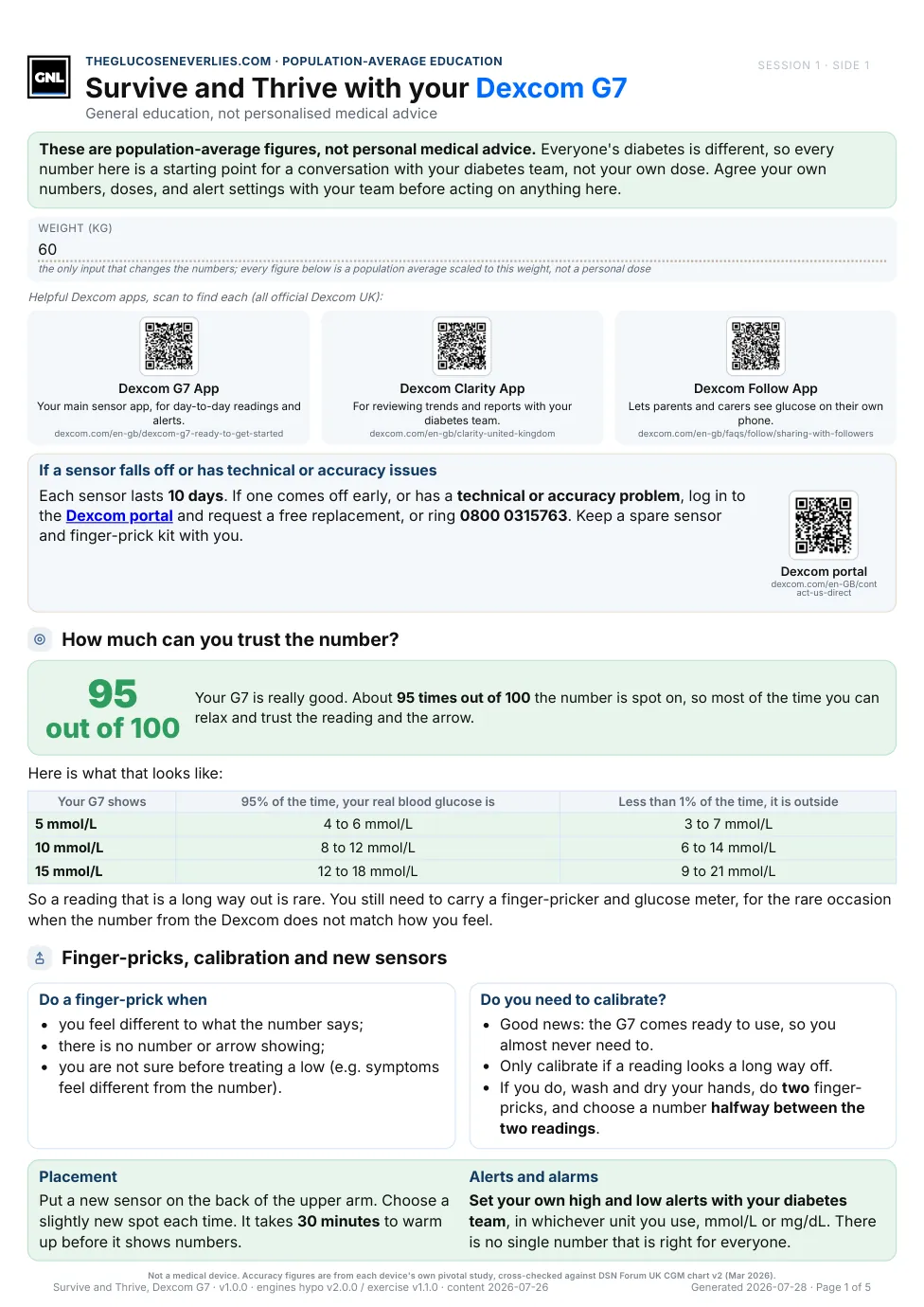
Reading a sensor is the easy part. Knowing what to do when it alarms before breakfast, or what to give before PE on a wet Tuesday, is the part that takes practice. Survive and Thrive is a short practical guide to using your Dexcom G7 in the situations that actually come up, written to be printed and kept where it is needed rather than read once and closed.
Getting it onto one page took more than a decade of paediatric clinic days, most of that time spent working out which parts of the evidence base change what a family actually does, and which parts are just weight. What survived is the minimum effective dose: the least teaching that still does the job.
Why it is called Survive and Thrive. Learning any new piece of technology starts with the survival rules, the small set of things that keep you safe while everything else is still unfamiliar: what to do about a low, when a high has gone on long enough to check ketones, when the number on the screen is not the whole story. Once that part is steady, the questions change, and thriving is the quieter business of getting more out of the sensor on an ordinary day. The guide is built in that order, with the published evidence set alongside what we see in clinic, and a little personalisation in it: you pick the carbohydrates you actually keep to hand, and Grace will scale the figures to a weight you enter.
Make one with your own weight in it
The guide below is a worked example at 60 kg; you can build your own with your weight and the carbohydrates you keep to hand, scaled from the same population averages.
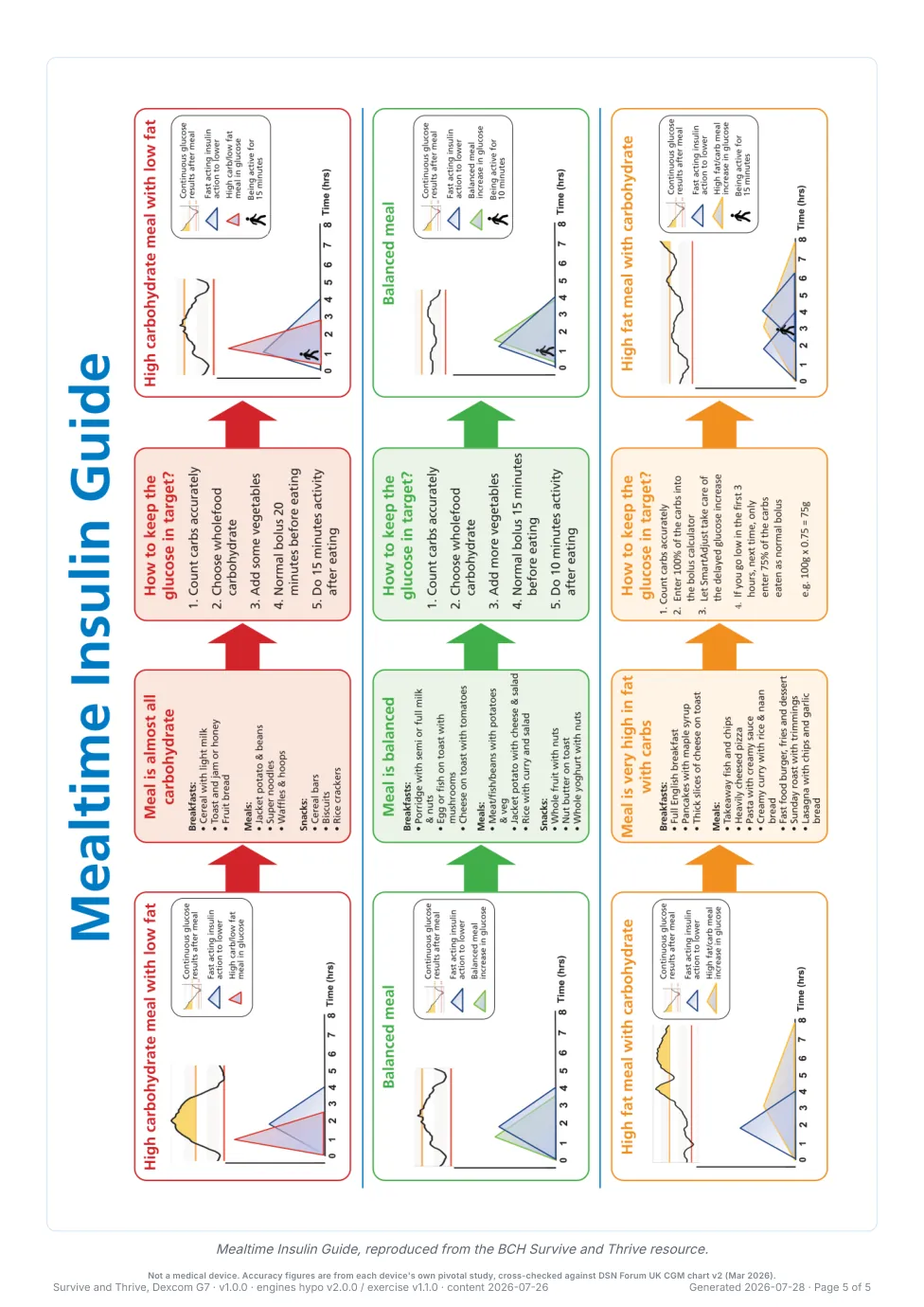
How to use your Dexcom G7, the one-page guide
What it walks you through.
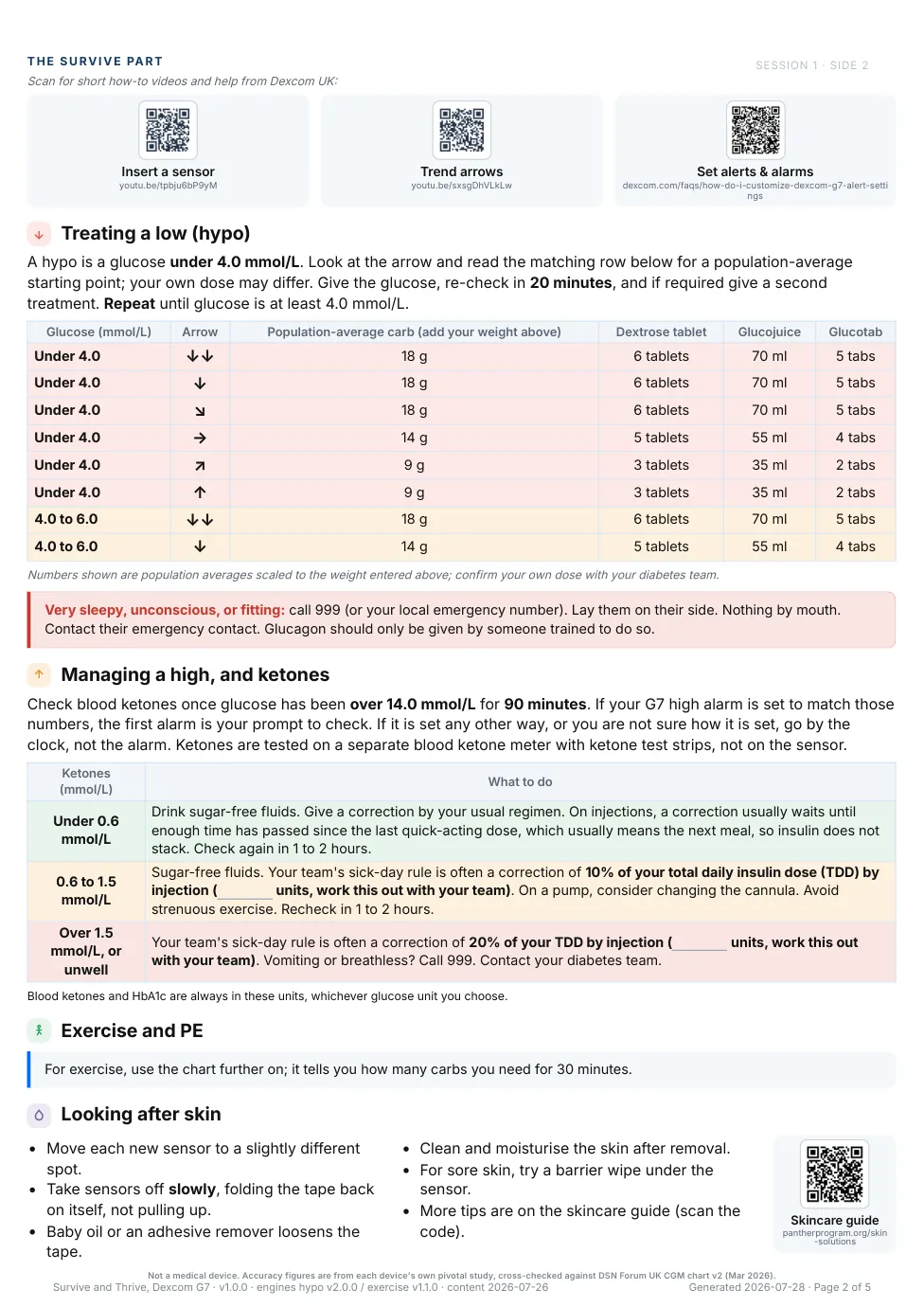
- Treating a low. Reading the glucose and the trend arrow together, and what that points to in grams of fast-acting carbohydrate, with the re-check timing.
- Highs and ketones. When a high has gone on long enough to check ketones, and what each ketone band means.
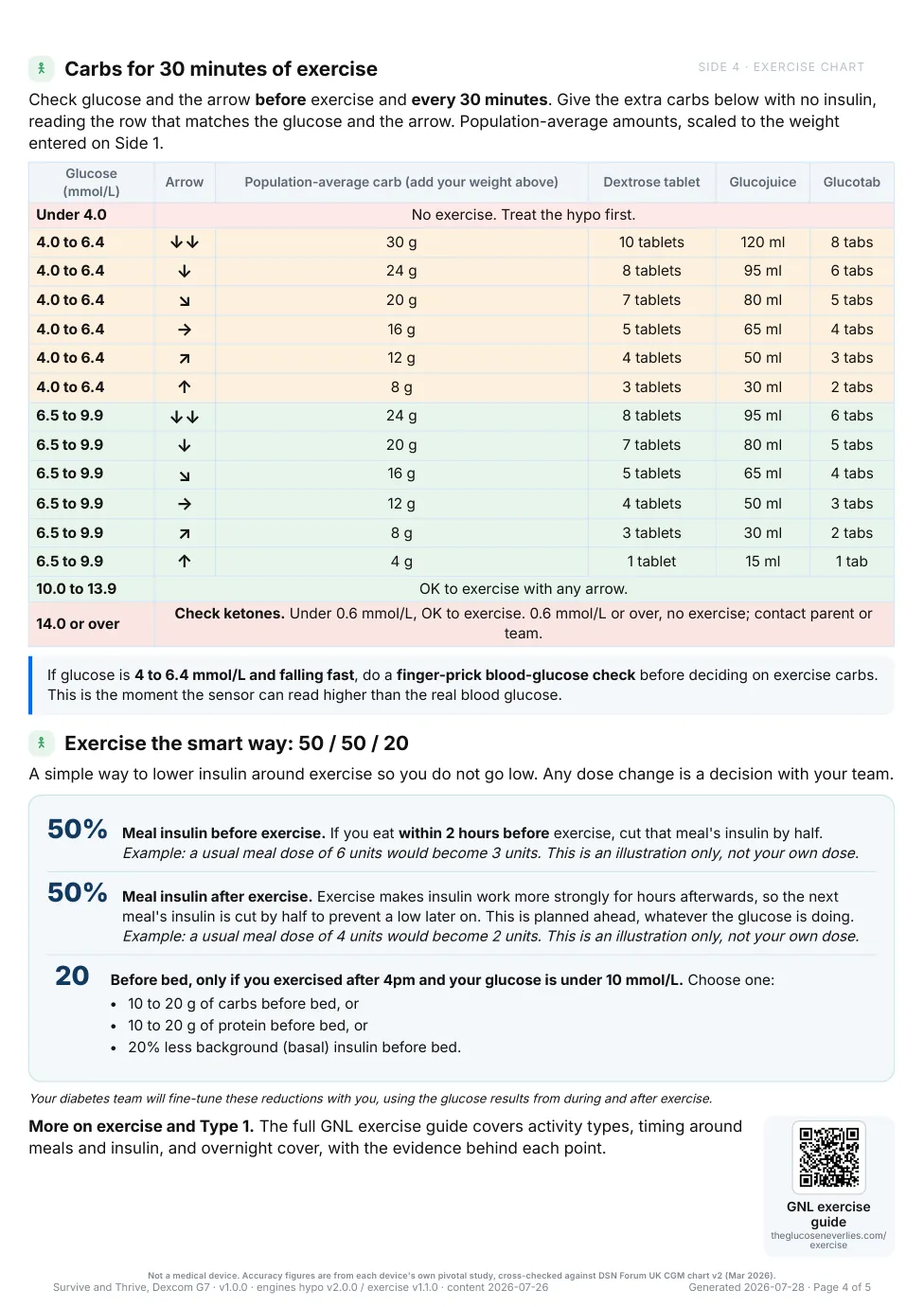
- Exercise. Carbohydrate for thirty minutes of activity, read off the same glucose-and-arrow pair, plus the insulin planning around it.
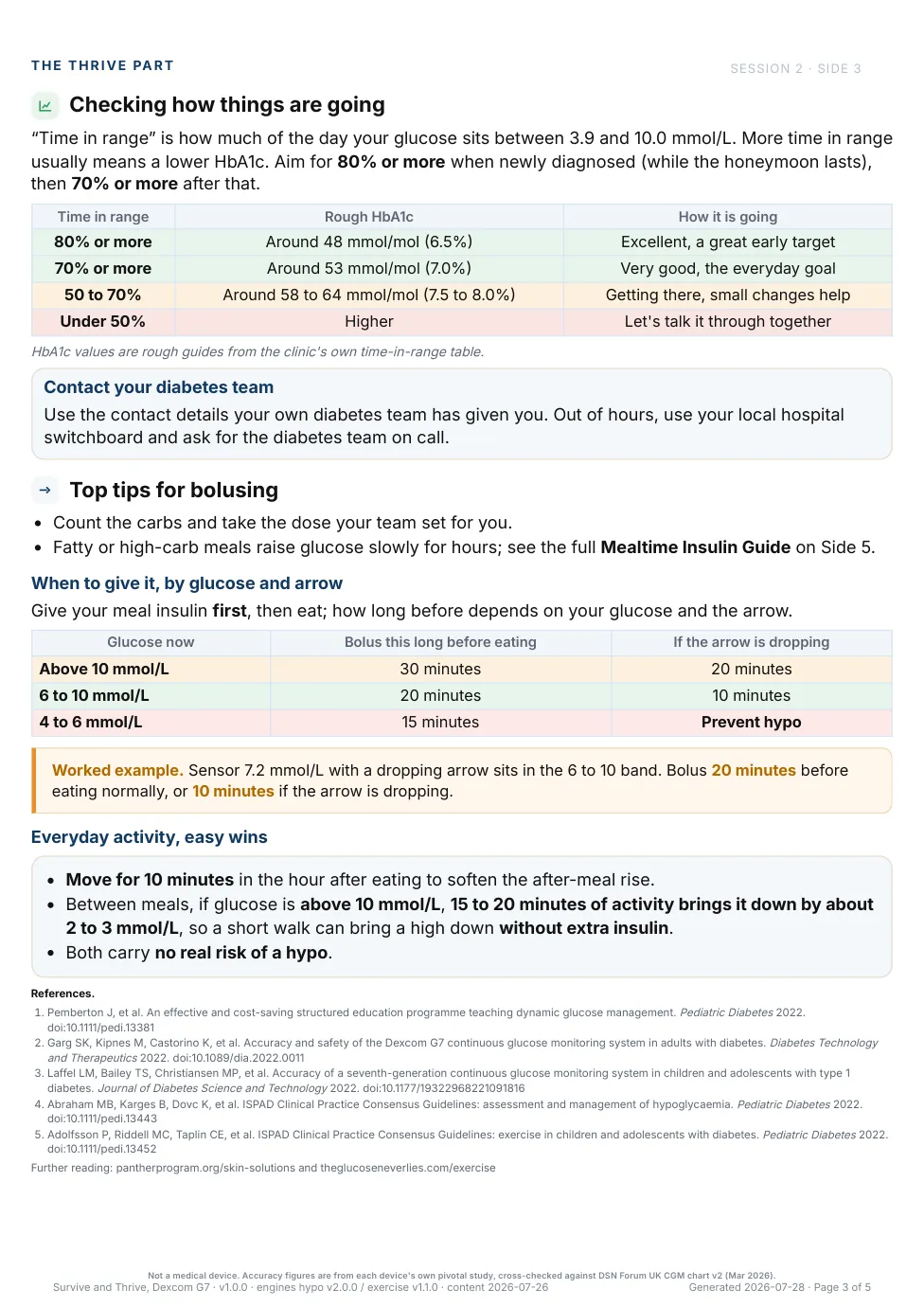
- The everyday things. When a finger-prick still matters even with a sensor on, looking after the skin underneath, and how mealtime insulin timing shifts with the arrow.
Two things worth knowing before you print it. The carbohydrate tables let you choose the three products you actually keep to hand, so the grams come out as that many tablets, millilitres or sweets rather than as a number to convert under pressure. And the trend arrows are drawn the way this sensor draws them, so the row you are looking for on paper matches the glyph on the screen.
Every figure on it is a population average scaled to a body weight. It is a starting point for a conversation with your diabetes team, not a personal dose, and the card says so on every side.
Device specifications
The headline numbers sit in the framework card above. The full device profile is here for anyone who wants the detail.
Full device profile
Manufacturer: Dexcom. Wear duration: 10 days plus 12-hour grace period (standard G7). ±20/20 agreement: 95.3% arm, 93.2% abdomen. Outside ±40/40: below 0.5% of readings (the black-swan zone, see the accuracy page). Calibration: not required, factory-calibrated; optional calibration accepted. Transmitter: all-in-one, integrated into the disposable sensor pod. Readings: every 5 minutes, continuous Bluetooth. Display: Dexcom app on iOS and Android, plus an optional standalone receiver. Indication: non-adjunctive (no confirmatory finger prick required for insulin dosing). Age indication: 2 years and older (buttock placement option for ages 2 to 6).
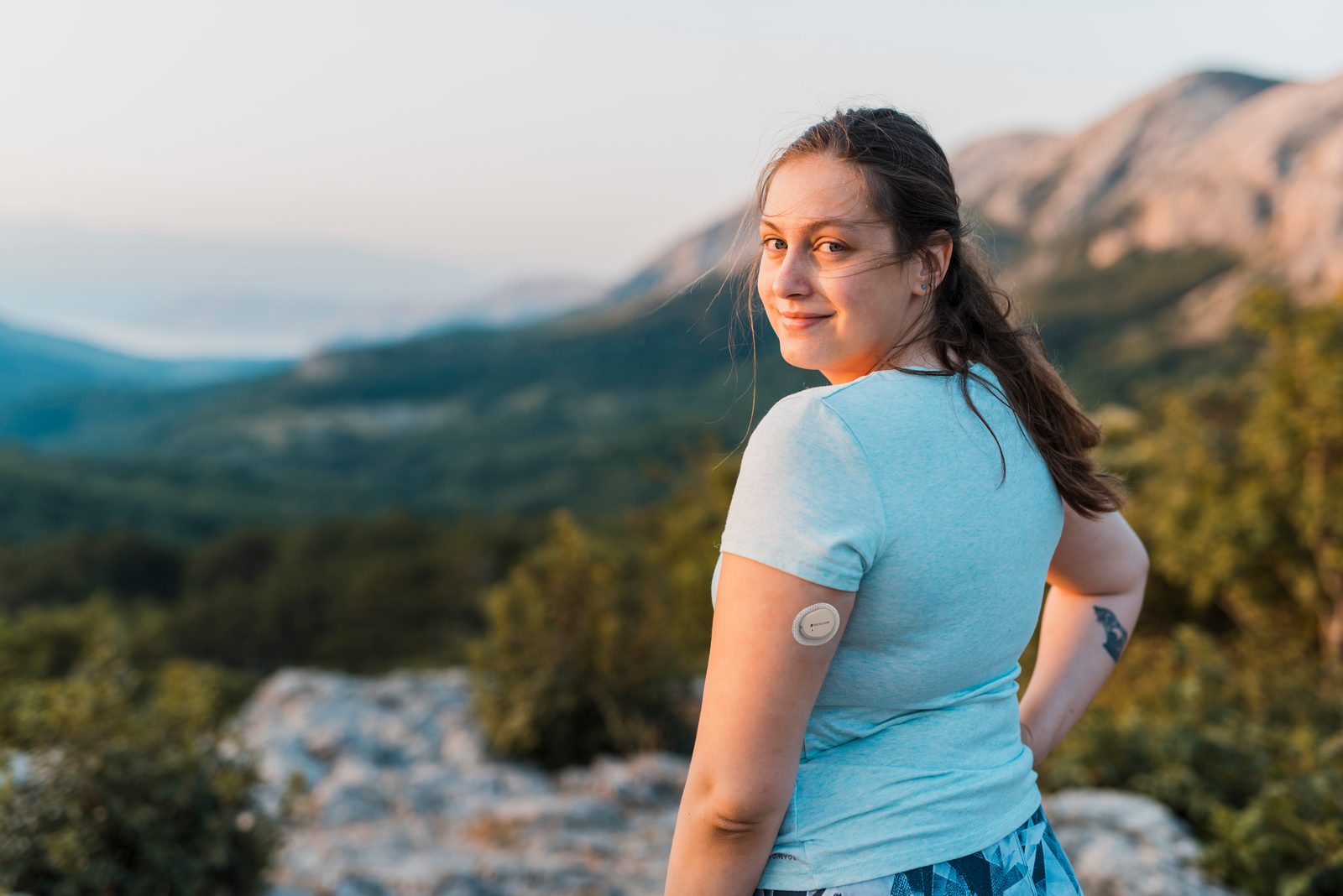
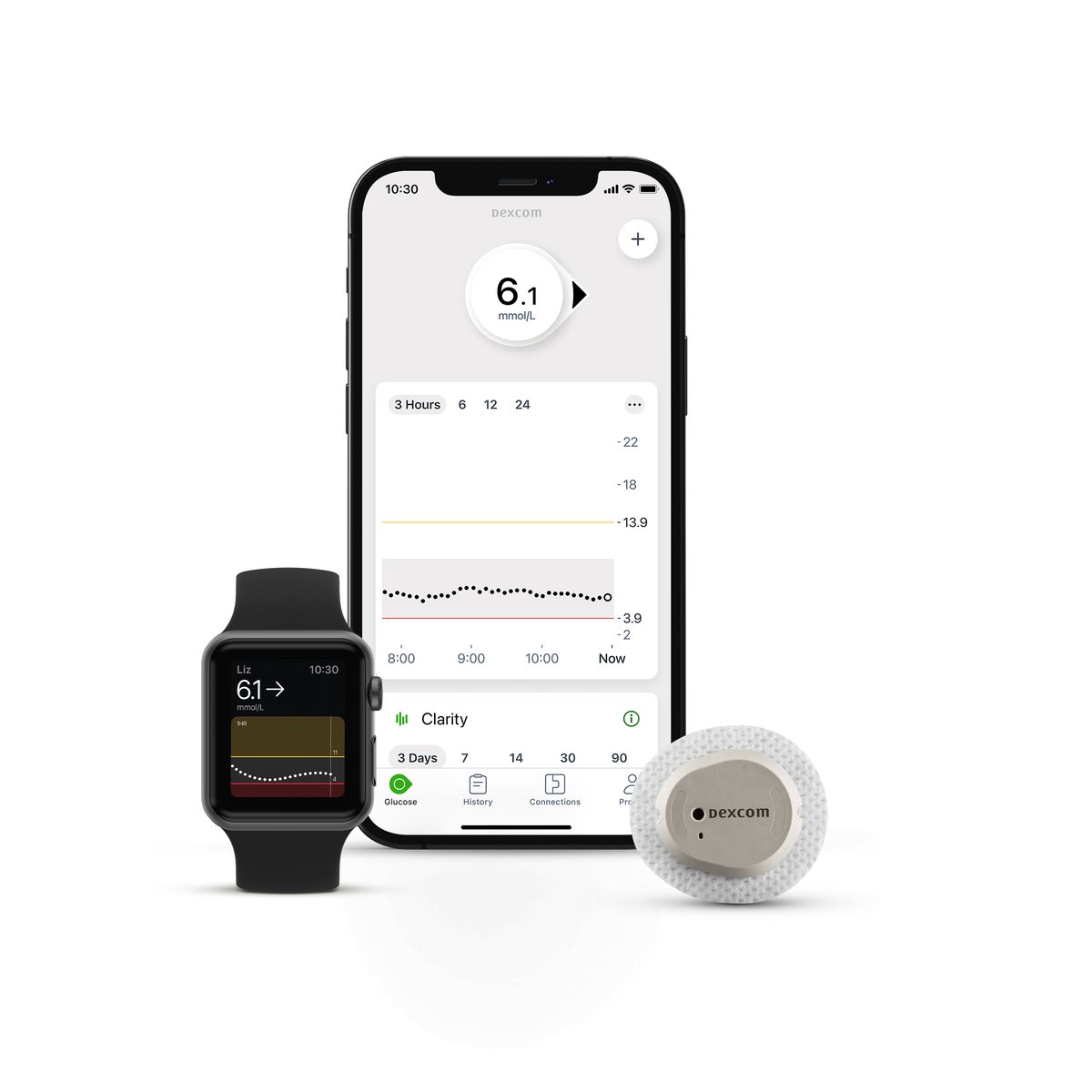
The all-in-one design is the thing patients mention first when they switch from G6. No separate transmitter to charge or lose track of means one less thing to remember on a busy morning, and the 12-hour grace period takes the pressure off swapping a sensor the moment it expires.
Accuracy
The number that matters is the ±20/20 agreement rate, the proportion of CGM readings close enough to laboratory truth to dose insulin from without a finger-prick. For the G7, that figure is 95.3% at the upper-arm placement Dexcom recommends, and 93.2% on the abdomen (Garg 2022, Diabetes Technology and Therapeutics). Paediatric data carries the same picture: 95.3% within ±20/20 on the upper arm and 92.9% on the abdomen across ages 7 to 17 (Laffel et al. 2022, Journal of Diabetes Science and Technology). The full thesis on what these numbers mean, and on the small fraction of readings that fall outside the ±40/40 safety band where errors become large enough to matter clinically, lives on the accuracy page.

In clinic, the arm-versus-abdomen gap catches people out more than the headline percentage does. A wearer who has had good results on the arm and then tries the abdomen for comfort can see a real drop in agreement, worth flagging before someone assumes their sensor has degraded when it is actually a placement choice.
AID system compatibility
The G7 has the widest AID system compatibility of any CGM currently on the UK market. Whichever pump someone is on, the sensor does not have to change.
One sensor, three AID systems. The G7 is the only CGM currently approved for use with Omnipod 5, Tandem t:slim X2 with Control-IQ, and CamAPS FX, the three patient-led AID systems on the UK market. The MiniMed 780G runs on its own three-sensor ecosystem and does not pair with the G7.
For people using a Tandem, Insulet, or mylife system, the G7 is the same sensor across pumps, a level of flexibility no other CGM currently offers.
This is usually the deciding factor for families weighing up a pump switch without wanting to give up a sensor they already trust. Worth walking through explicitly in clinic: the CGM choice and the pump choice do not have to be re-decided together if the G7 is already working well.
What the G7 brings beyond accuracy
Alarms and alerts
Customisable high and low alerts, plus two features built specifically to cut alarm fatigue: Urgent Low Soon warns when glucose is predicted to reach 3.1 mmol/L (55 mg/dL) within the next 20 minutes; Delay First High holds off sounding the first high alert after a meal-related rise that is already coming back down on its own, so a normal post-meal peak does not trigger an alarm it does not need. The 12-hour grace period at end-of-life means no end-of-sensor alarm until the grace window expires either, less interruption all round.
Follow and Share
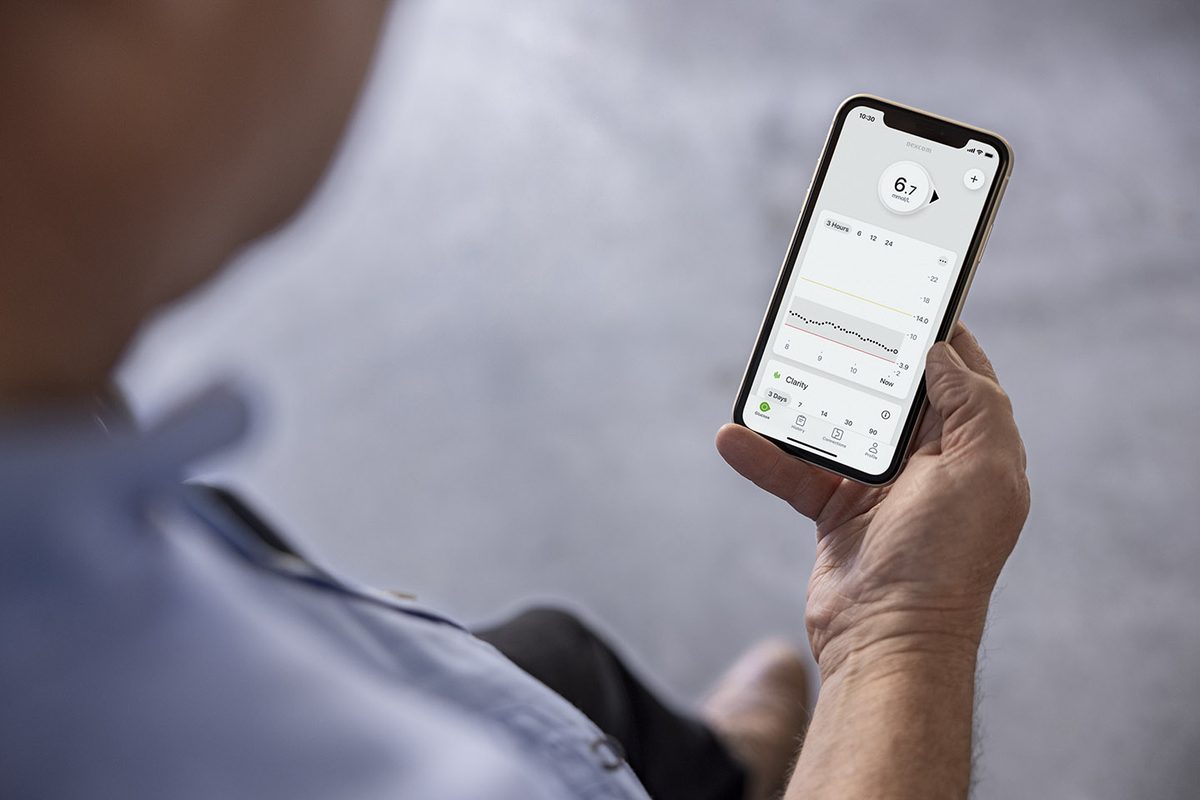
The Dexcom Follow app lets family, carers, and school staff see real-time glucose data. Particularly valued in paediatric use and in transition to independent young adulthood.
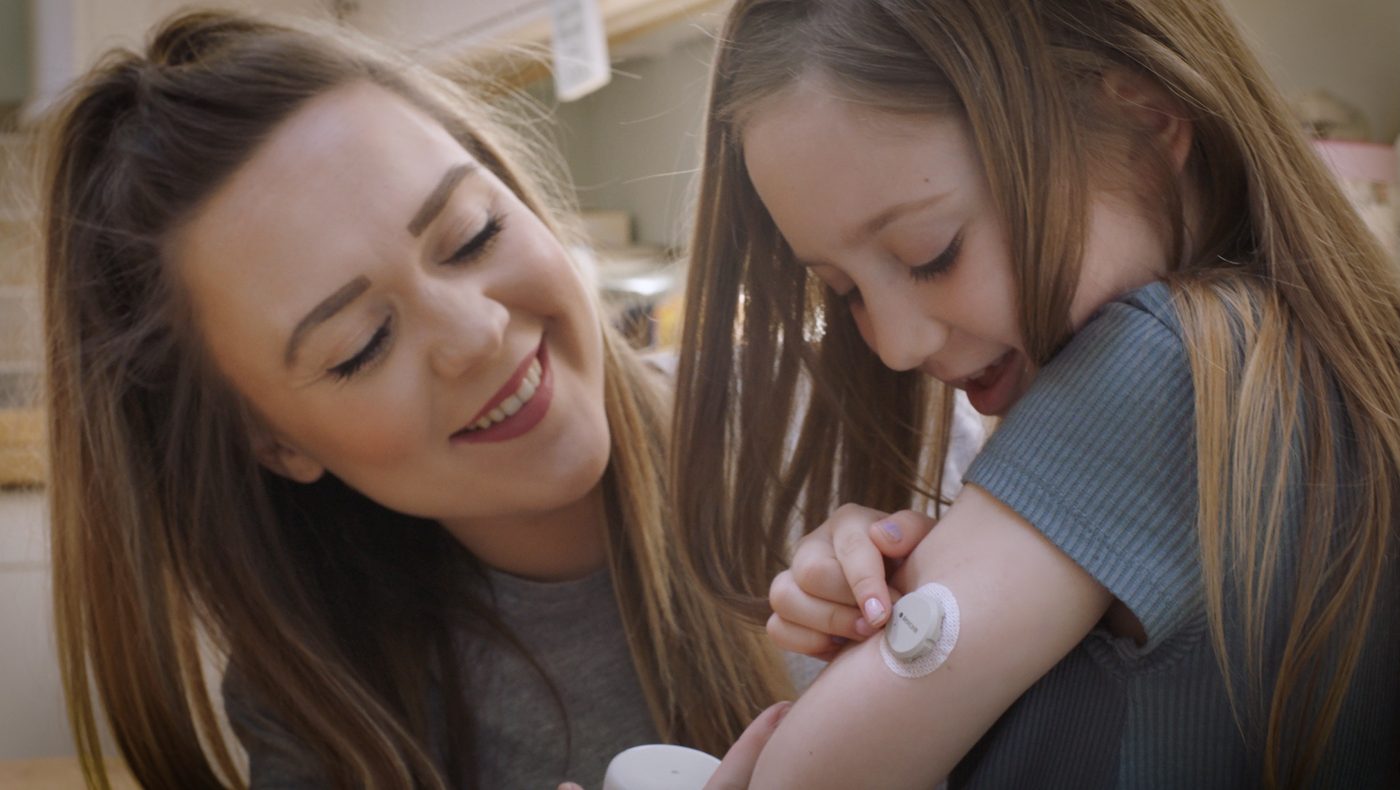
All-in-one design
Unlike the G6, the G7 has no separate transmitter clip. The transmitter sits inside the disposable sensor pod, fewer parts to manage, fewer things to lose.

Optional calibration
Factory-calibrated by default, but accepts an optional calibration entry if someone wants one. This can be useful where glucose is stable and a reading still seems to sit in the ±40/40 black swan zone, a genuine, persisting discordance rather than the normal lag of a rapid rise or fall. A properly performed finger-prick calibration there adjusts the sensor going forward, rather than letting that discordance carry on. Calibrating during a rapid rise or fall is not recommended, since the mismatch is usually lag, not error. Any calibration entered should come from a real finger-prick test, never from another CGM.
Receiver option
A standalone Dexcom receiver is available for anyone who prefers not to use a smartphone, including settings (work, school, prison-related) where personal phone use is restricted.
Urgent-low and rapidly-falling alerts do a genuinely good job of cutting alarm fatigue without hiding anything important, worth setting up properly at initiation rather than leaving on factory defaults, since the difference in a wearer’s day-to-day tolerance for the device is real.
Notes
Regulatory detail, evidence depth, and framing caveats behind this page
- GNL Insights. The GNL Insights boxes through this guide are the team’s own perspective and clinic experience: opinion and pattern-recognition, not a stated clinical fact or a personalised recommendation. Numbered claims elsewhere on this page are sourced in the References below; GNL Insights are not.
- Accuracy metric. GNL reports CGM accuracy as ±20/20 and ±40/40 agreement, not MARD, because MARD is a single average that hides the rare large errors that matter for dosing. MARD is on file but not used as a headline figure.
- Framework status. The 5/5 score reflects the DSN CGM-AID five-question framework, a GNL educational synthesis, not a manufacturer or regulator rating.
Dexcom G7 Knowledge Check
That was the Dexcom G7 in practice, from sensor warm-up to reading the trend. A short assessment on it follows, and 9 out of 10 earns your certificate.
References
- Garg SK et al. (2022). Accuracy and Safety of Dexcom G7 Continuous Glucose Monitoring in Adults with Diabetes. Diabetes Technology and Therapeutics. n=316, 619 sensors, 77,774 matched pairs.
- Laffel L et al. (2022). Accuracy of the Dexcom G7 in Youth. Journal of Diabetes Science and Technology. Ages 7 to 17.
Device 1 of 4
Dexcom G7