
CGM Device Guide
FreeStyle Libre 2 Plus and 3 Plus
Exceptional accuracy and growing connectivity make the FreeStyle Libre Plus family a powerhouse in the CGM space. Both Plus variants report 94% adult ±20/20 accuracy in the current published pivotal, the Libre 3 Plus is the smallest CGM sensor commercially available, and AID pairing keeps expanding, now reaching CamAPS FX and Tandem’s Control-IQ+ on both the t:slim X2 and the Tandem Mobi.
Ask Grace
Want to ask how FreeStyle Libre readings behave across your own day? Ask Grace.
FreeStyle Libre 2 Plus and 3 Plus at a glance
- ±20/20 agreement: 94% adults overall (Alva et al 2025, the current published pivotal covering both Plus variants)
- Smallest CGM on the market: the Libre 3 Plus is about the size of a UK one-pound coin, more than half the size of the Libre 2 Plus (Abbott UK product page)
- Continuous Bluetooth, Libre 3 Plus: a reading every minute, no scanning required
- Age indication: 2 years and older, both variants
- AID compatibility: Libre 2 Plus pairs with Omnipod 5. Libre 3 Plus pairs with CamAPS FX, Tandem Control-IQ+ (t:slim X2 and Tandem Mobi) and, since Insulet’s September 2026 update, Omnipod 5 (newer Pods and Controller software 4.0.3 needed)
- Wear and calibration: 15 days, factory calibrated, no finger prick required to dose
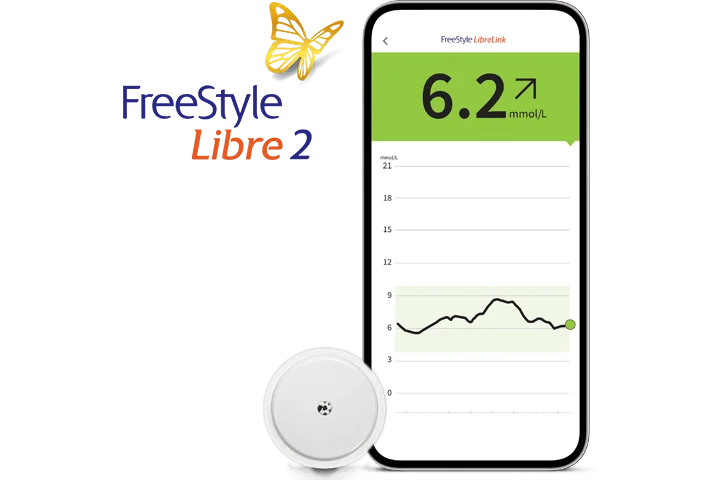 FreeStyle Libre 2 Plus sensor and LibreLink app
 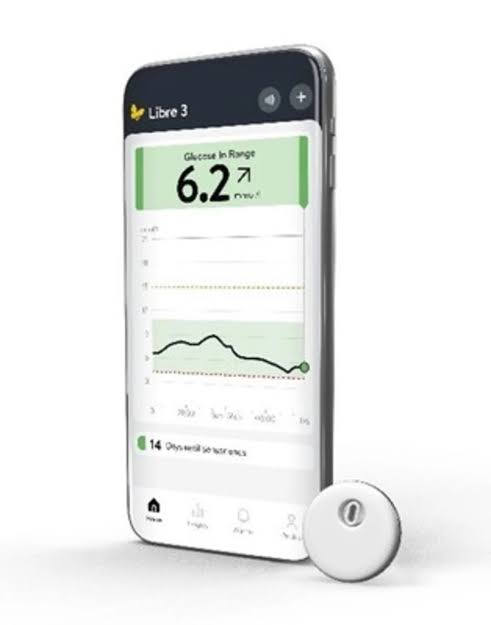 FreeStyle Libre 3 Plus sensor and LibreLink app
 This guide covers the AID-paired Libre 2 Plus and Libre 3 Plus. Abbott also sells the original FreeStyle Libre 2 and Libre 3 without the Plus connectivity upgrade or AID pairing; not covered on this page.
Framework status
Data sufficiency: Met. Alva et al (2025), J Diabetes Sci Technol 20(4):1122-1130, the current published peer-reviewed pivotal covering both Libre 2 Plus and Libre 3 Plus.
Using FreeStyle Libre Plus family day to day
Reading a sensor is the easy part. Knowing what to do when it alarms before breakfast, or what to give before PE on a wet Tuesday, is the part that takes practice. Survive and Thrive is a short practical guide to using either sensor in the situations that actually come up, written to be printed and kept where it is needed rather than read once and closed.
Two sensors, one guide each, and both shorter than they could have been. That is the point. A decade and more of clinic days, alongside the 300-odd children and families we look after, goes into deciding what to leave out, because the evidence base is large and the slice of it that changes a school morning is small. Each guide carries the minimum effective dose and nothing spare.
Why it is called Survive and Thrive. The first weeks with a new sensor are about the survival rules: treating a low, knowing when a high needs ketones checking, working out how far to trust the number in front of you. Those come first because they are what keeps an ordinary day from going wrong. Thriving comes after, once the basics no longer take any thinking, and it is about getting more out of the sensor day to day. Both guides follow that order, with the published evidence and what we see in clinic sitting side by side, and a little personalisation in each: your own choice of fast-acting carbohydrate, and figures Grace will scale to a weight you enter.
Each sensor has its own guide, because the two do not behave identically. Open the one you use.
Make one with your own weight in it
The guides below are worked examples at 60 kg; you can build your own with your weight and the carbohydrates you keep to hand, scaled from the same population averages.
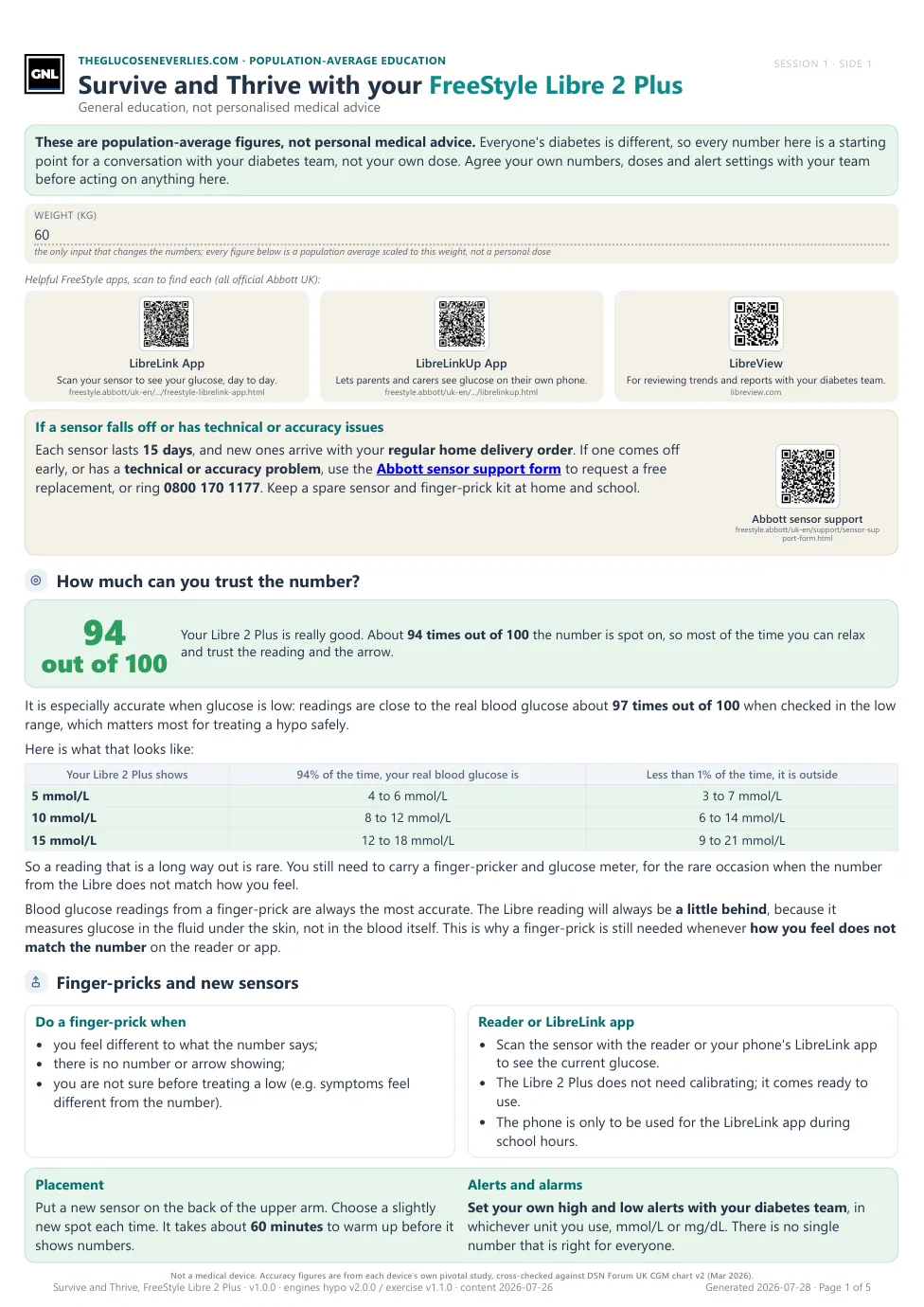
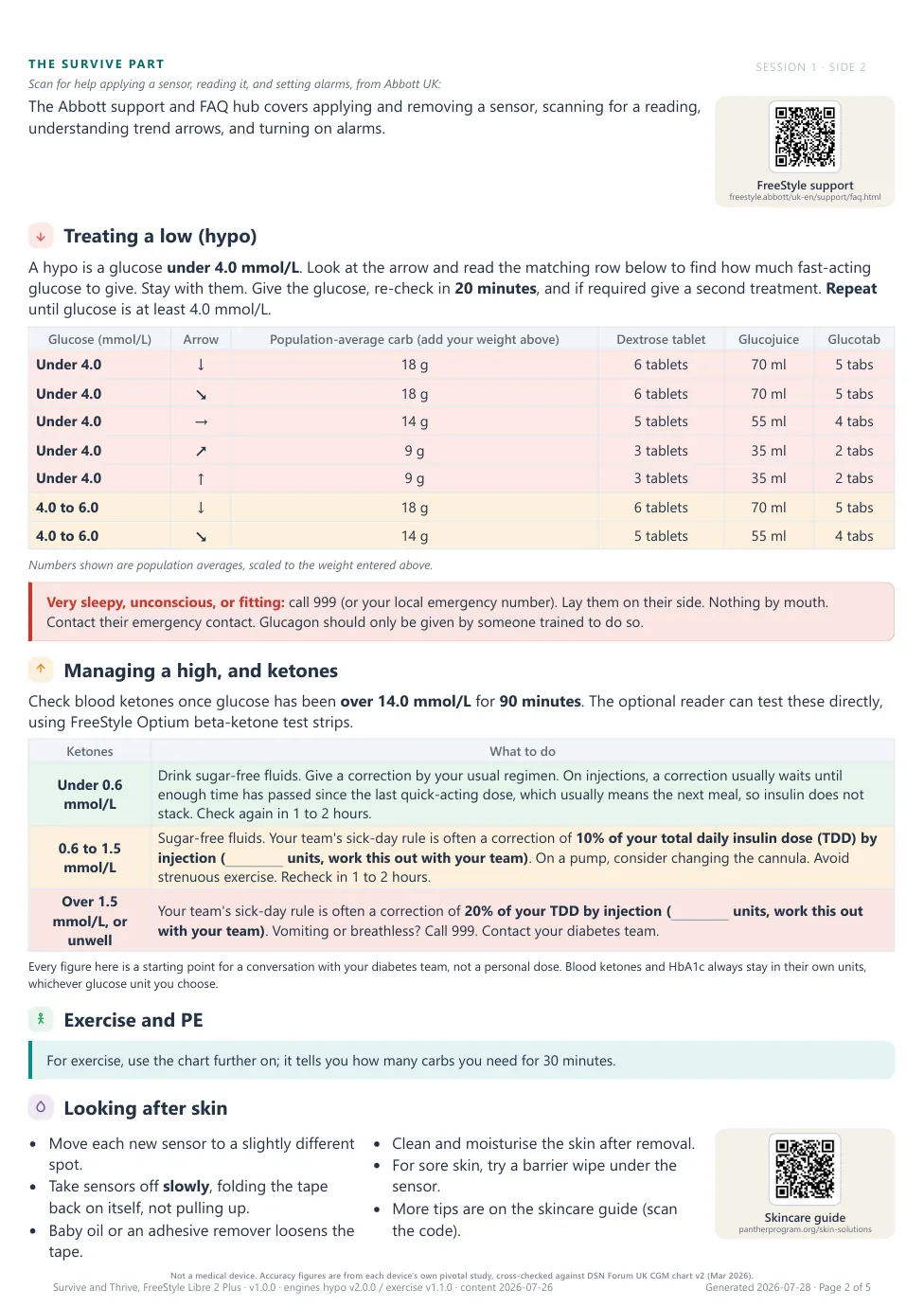
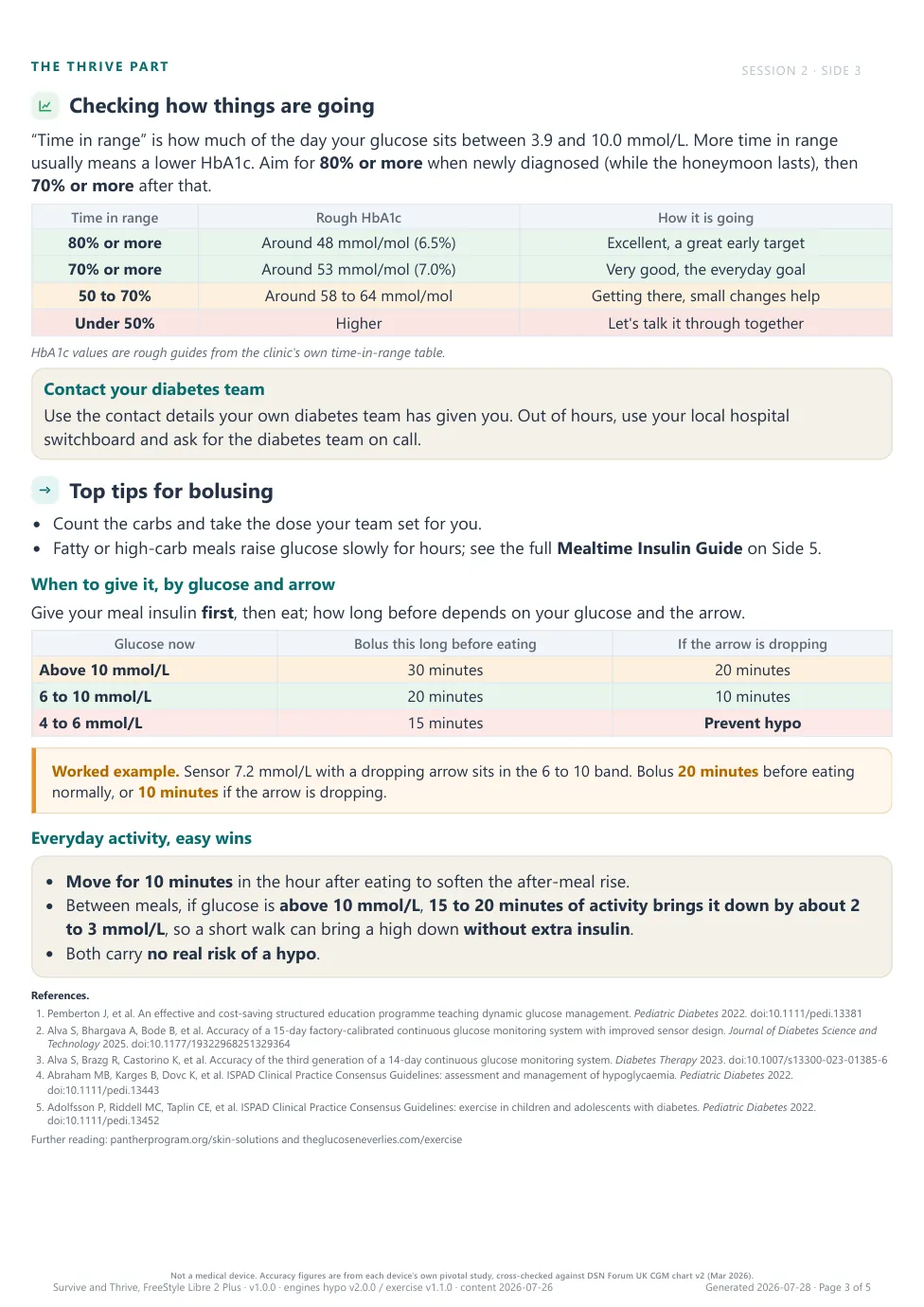
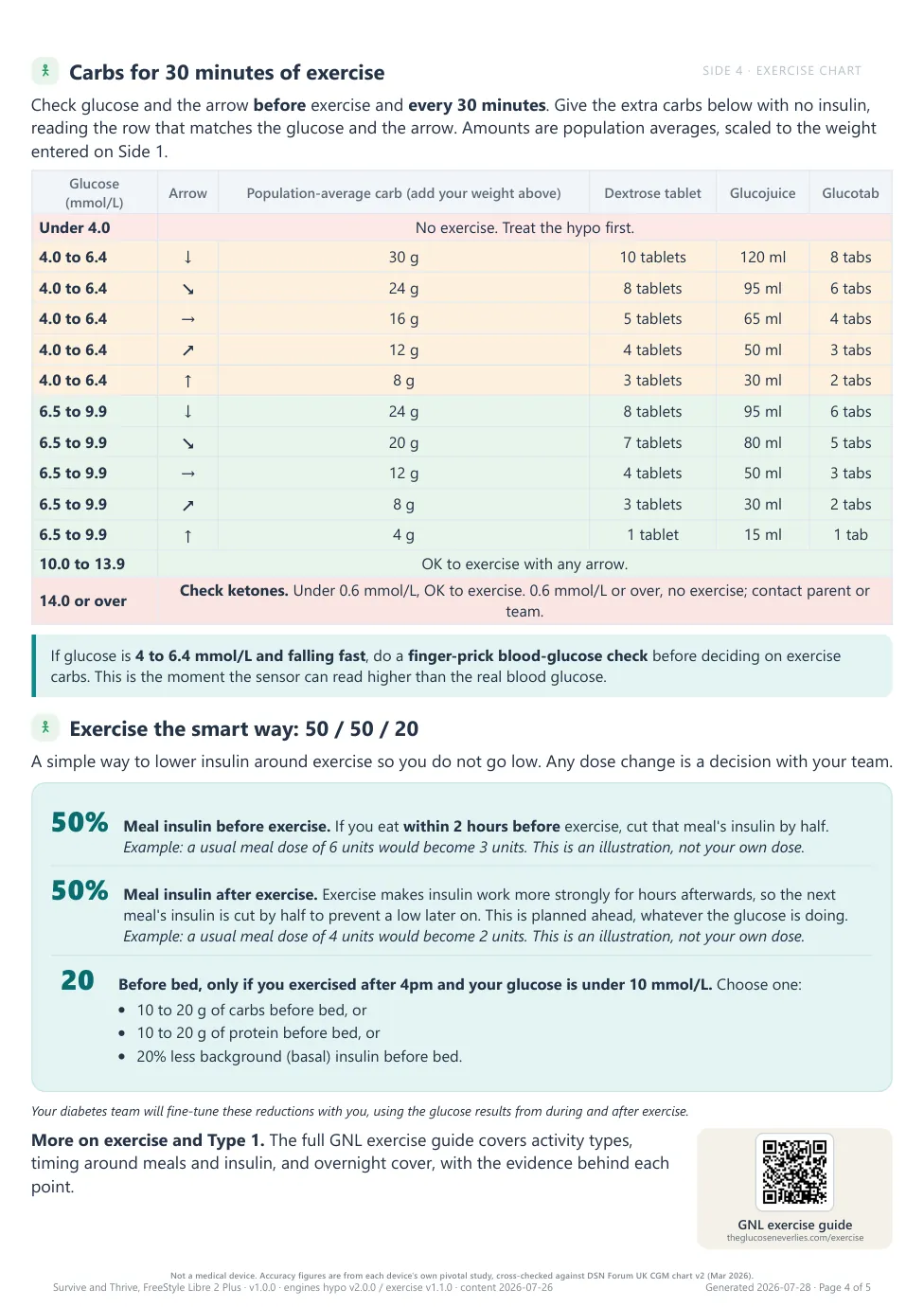
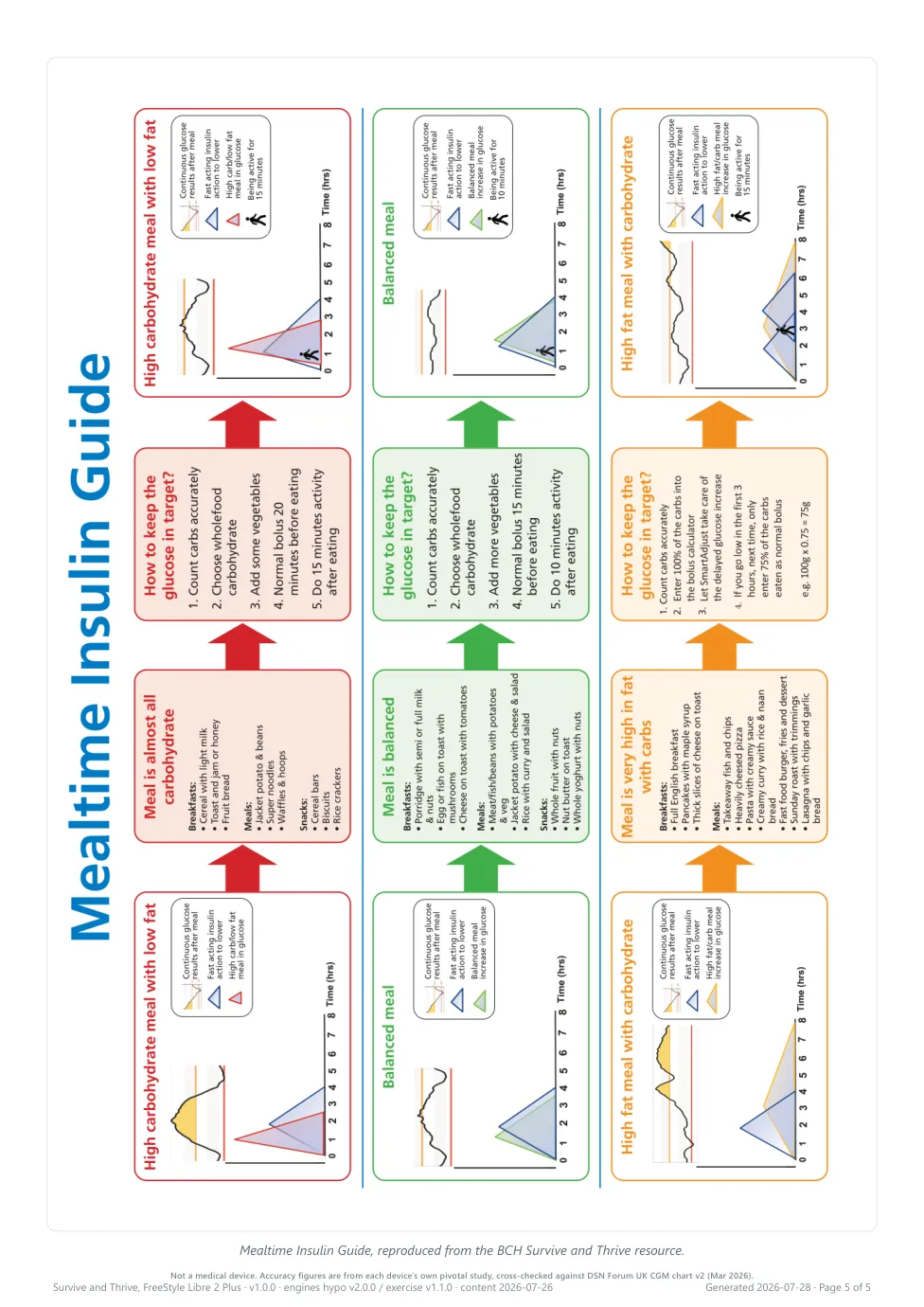
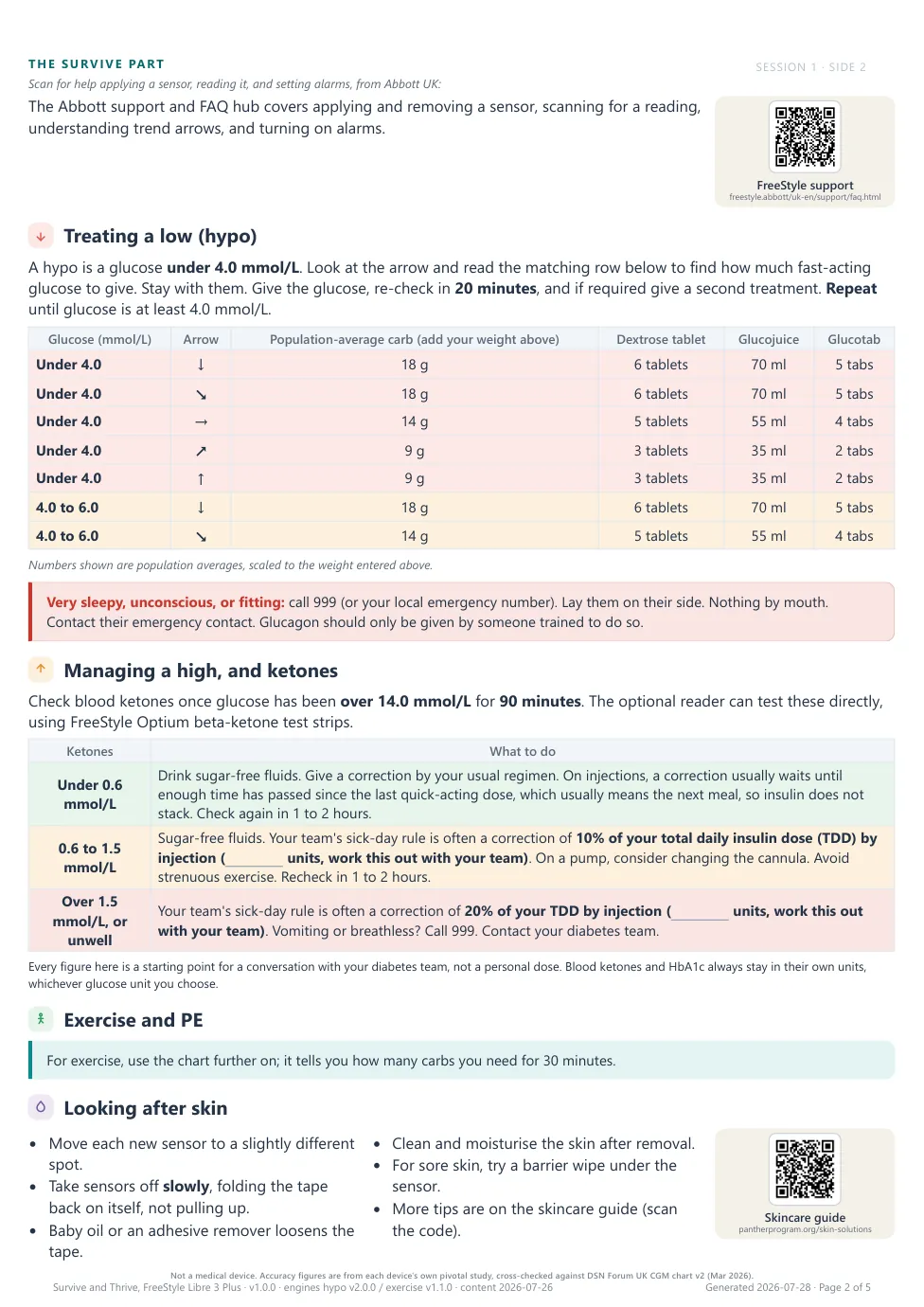
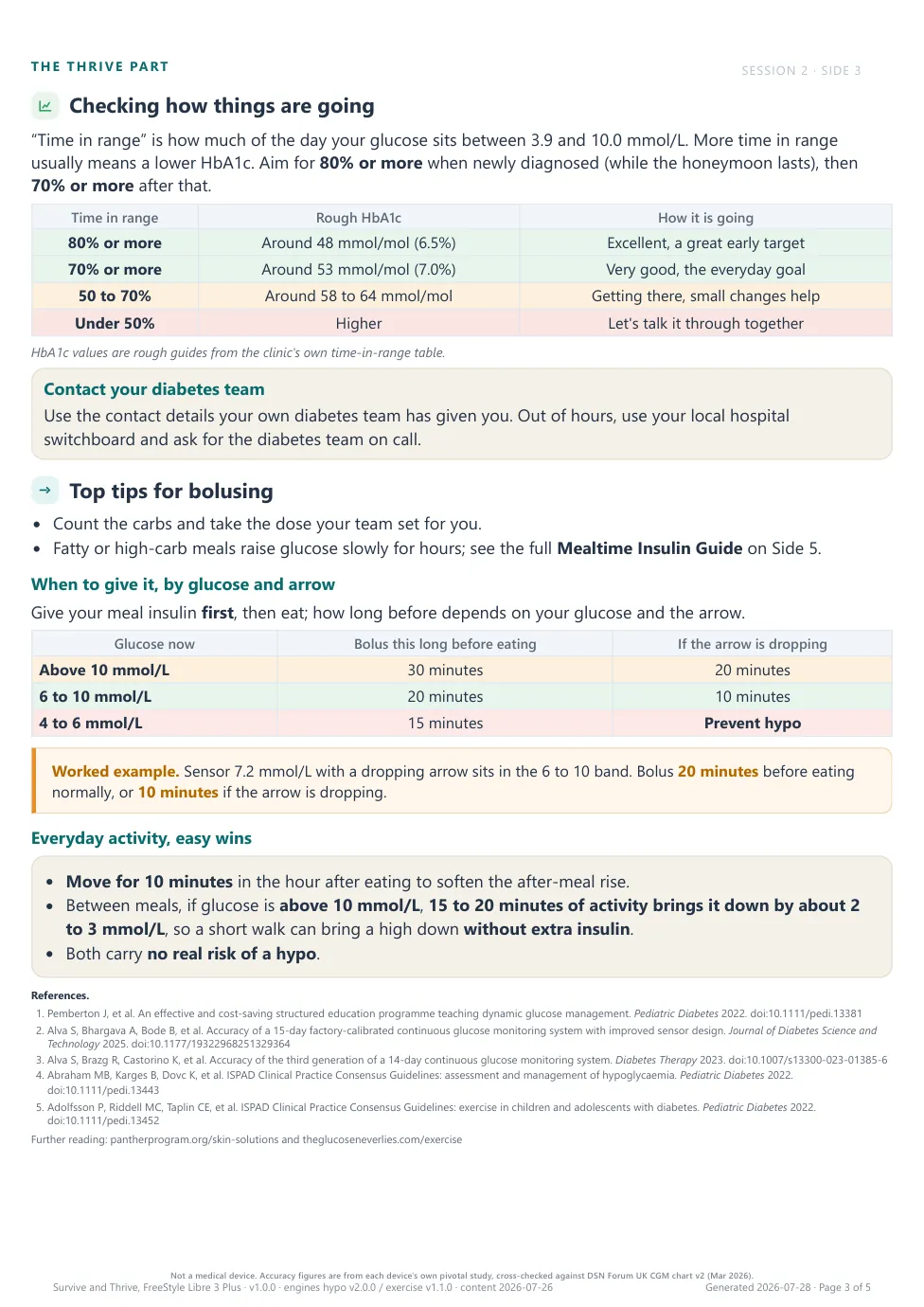
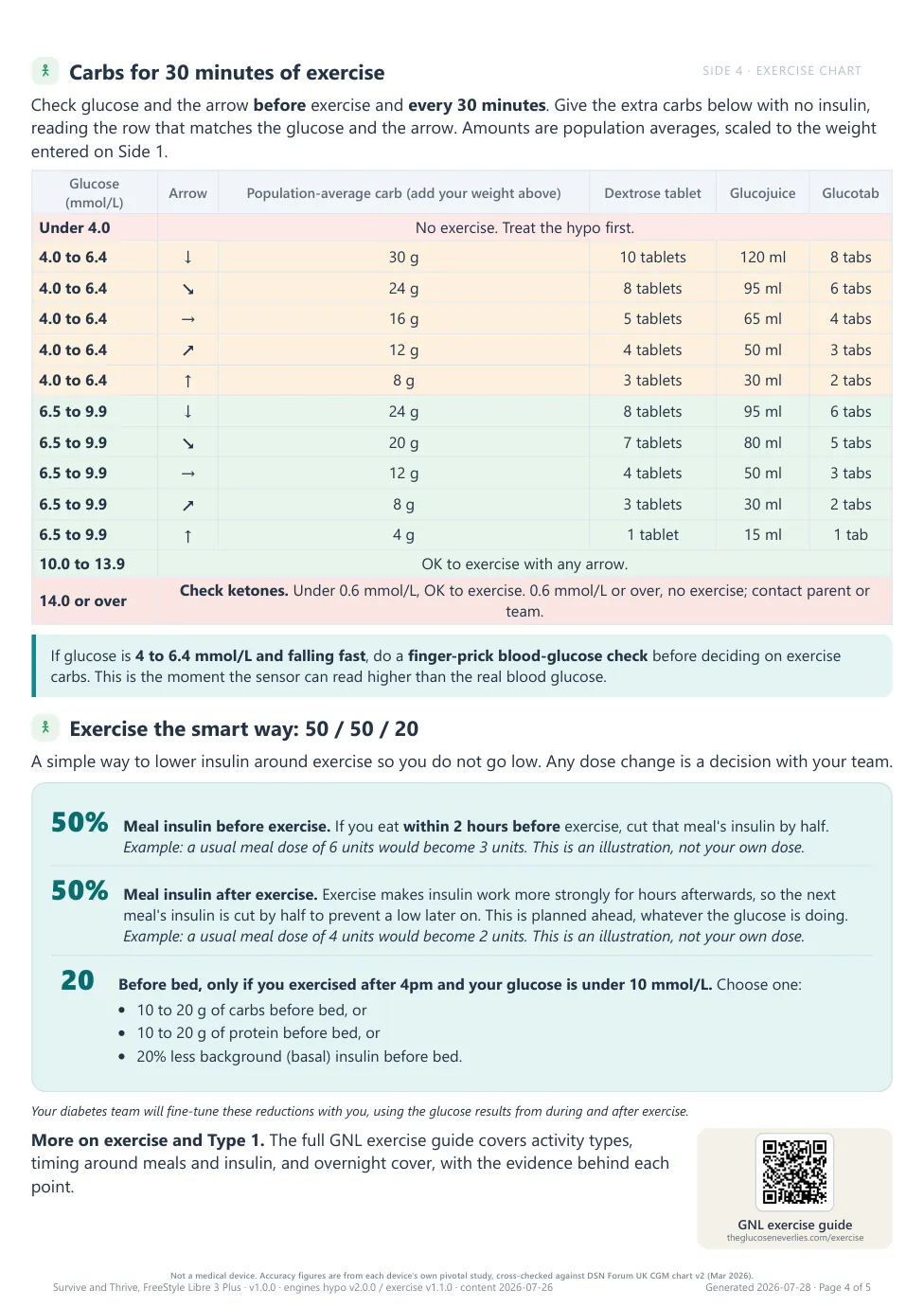
FreeStyle Libre 2 Plus, the one-page guide
What it walks you through.
- Treating a low. Reading the glucose and the trend arrow together, and what that points to in grams of fast-acting carbohydrate, with the re-check timing.
- Highs and ketones. When a high has gone on long enough to check ketones, and what each ketone band means.
- Exercise. Carbohydrate for thirty minutes of activity, read off the same glucose-and-arrow pair, plus the insulin planning around it.
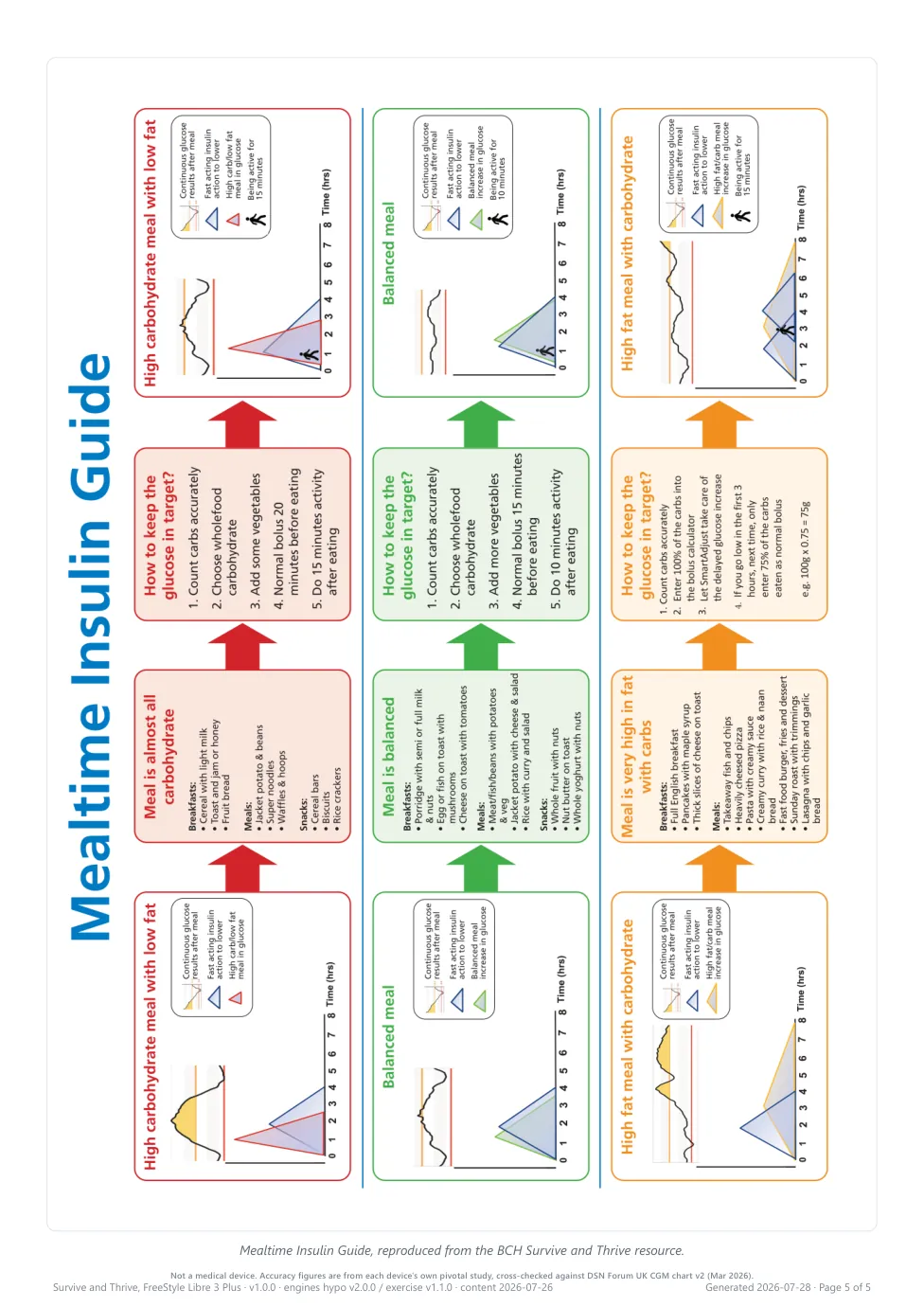
- The everyday things. When a finger-prick still matters even with a sensor on, looking after the skin underneath, and how mealtime insulin timing shifts with the arrow.
Two things worth knowing before you print it. The carbohydrate tables let you choose the three products you actually keep to hand, so the grams come out as that many tablets, millilitres or sweets rather than as a number to convert under pressure. And the trend arrows are drawn the way this sensor draws them, so the row you are looking for on paper matches the glyph on the screen.
Every figure on it is a population average scaled to a body weight. It is a starting point for a conversation with your diabetes team, not a personal dose, and the card says so on every side.
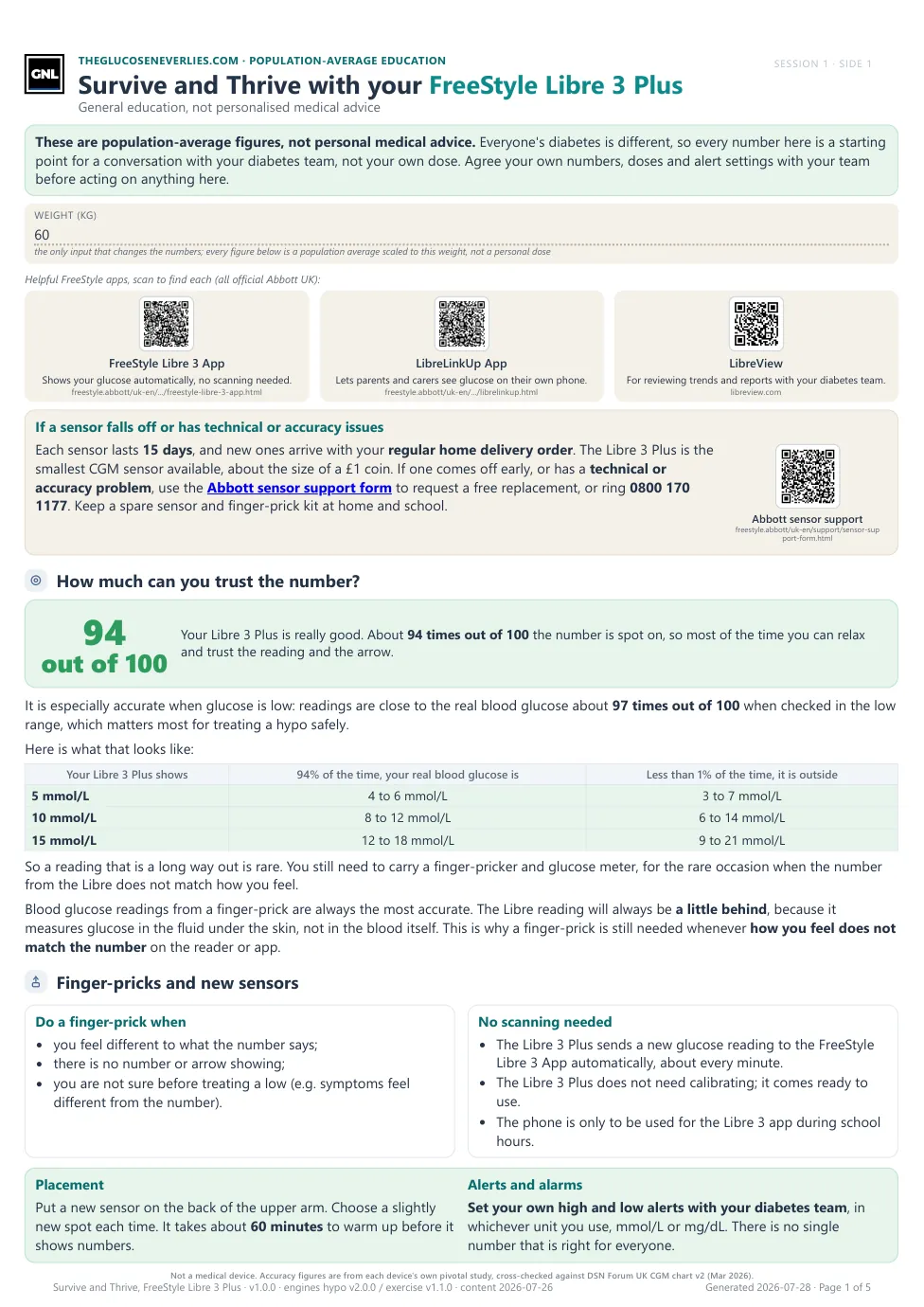
FreeStyle Libre 3 Plus, the one-page guide
What it walks you through.
- Treating a low. Reading the glucose and the trend arrow together, and what that points to in grams of fast-acting carbohydrate, with the re-check timing.
- Highs and ketones. When a high has gone on long enough to check ketones, and what each ketone band means.
- Exercise. Carbohydrate for thirty minutes of activity, read off the same glucose-and-arrow pair, plus the insulin planning around it.
- The everyday things. When a finger-prick still matters even with a sensor on, looking after the skin underneath, and how mealtime insulin timing shifts with the arrow.
Two things worth knowing before you print it. The carbohydrate tables let you choose the three products you actually keep to hand, so the grams come out as that many tablets, millilitres or sweets rather than as a number to convert under pressure. And the trend arrows are drawn the way this sensor draws them, so the row you are looking for on paper matches the glyph on the screen.
Every figure on it is a population average scaled to a body weight. It is a starting point for a conversation with your diabetes team, not a personal dose, and the card says so on every side.
Device specifications
The full device profile for both Plus variants is below.
| Feature | FreeStyle Libre 2 Plus | FreeStyle Libre 3 Plus |
|---|---|---|
| Wear duration | Up to 15 days | 15 days |
| Form factor | Standard footprint, larger than Dexcom G7 | More than half the size of Libre 2 Plus, smallest CGM commercially available |
| Reading method | Under review, not yet confirmed (see note below) | Continuous Bluetooth, no scanning required |
| Calibration | Not required, not accepted | Not required, not accepted |
| Display | LibreLink app; optional reader (also does blood ketone testing, see below) | LibreLink app; optional Libre 3 reader (also does blood ketone testing, see below) |
| Indication | Non-adjunctive | Non-adjunctive |
| Age indication | 2 years and older | 2 years and older |
| AID compatible | Omnipod 5 | CamAPS FX; Tandem Control-IQ+ (t:slim X2 and Mobi) |
One detail is still being confirmed: whether the Libre 2 Plus needs a scan for a current reading or streams continuously like the Libre 3 Plus. GNL’s own sources currently disagree; this page will update as soon as it is confirmed.
The size difference between the 2 Plus and 3 Plus reads like a footnote in a spec table; in clinic it is often the deciding factor. Someone self-conscious about a visible sensor, or a small child who tugs at anything raised off the skin, notices the 3 Plus’s footprint before they notice a single accuracy number.
Accuracy
For both the Libre 2 Plus and Libre 3 Plus, ±20/20 agreement is 94% in adults overall (94.2% adults, 94.0% paediatric ages 6 to 17), the proportion of CGM readings close enough to laboratory truth to dose insulin from without a finger-prick, from Alva et al (2025), Journal of Diabetes Science and Technology, the current published pivotal covering both variants together. GNL also reports an outside-±40/40 figure on most CGM device pages, the black swan zone where an error is large enough to matter clinically; the Alva 2025 abstract does not publish one, so the figure in the table below is taken from the house standard instead, the DSN Forum UK CGM Comparison Chart v2 (March 2026), which computes every device the same way and puts both Plus variants above 99.5% within ±40/40. The full thesis on what this number means lives on the accuracy page.
| Metric | Libre 2 Plus | Libre 3 Plus |
|---|---|---|
| Framework score | 5/5 | 5/5 |
| ±20/20 agreement | 94% adults (n=148), 94% paediatric (n=127); one shared chart row covers both variants, since they run the same 15-day sensor | |
| Outside ±40/40 | Under 0.5% (the chart reports more than 99.5% within ±40/40 for both variants); not separately reported in the Alva 2025 abstract | |
| Evidence source | DSN Forum UK CGM Comparison Chart v2 (March 2026), refs 6 and 7, the house standard for CGM accuracy figures; underlying pivotal Alva et al 2025, Journal of Diabetes Science and Technology 20(4):1122-1130, 332 enrolled across 7 US sites, venous YSI comparator | |
A separate, larger meta-analysis (Vaughan N, 2025, Diabetes Technology and Obesity Medicine) covers a decade of FreeStyle Libre accuracy studies across the whole family, background context rather than a Plus-variant-specific figure.
This figure comes from a genuine peer-reviewed pivotal study, not a regulatory filing summary; worth knowing the evidence shape either way. A finger-prick remains the standard safety step whenever a reading and how someone feels disagree.
AID system compatibility
AID compatibility no longer splits cleanly by generation. The Libre 2 Plus pairs with one system; the Libre 3 Plus pairs with several, and Omnipod 5 now takes either.
The Libre 2 Plus pairs only with Omnipod 5. The Libre 3 Plus pairs with CamAPS FX, with Tandem’s Control-IQ+ (CIQ+) on both the t:slim X2 and the Tandem Mobi, and, since Insulet’s update of 8 and 9 September 2026, with Omnipod 5 as well. Neither Libre variant pairs with the MiniMed 780G; the 780G runs its own three-sensor ecosystem, and the Abbott-made Instinct sold inside it is not the consumer Libre.
| AID system | Pump | Libre 2 Plus | Libre 3 Plus |
|---|---|---|---|
| Omnipod 5 | Insulet, tubeless | Yes | No |
| t:slim X2 (Control-IQ+) | Tandem, tubed | No | Yes |
| Tandem Mobi (Control-IQ+) | Tandem, on-body | No | Yes |
| CamAPS FX | YpsoPump, tubed | No | Yes |
| MiniMed 780G | Medtronic, tubed | No | No |
For people on Omnipod 5, either Plus sensor now pairs: the Libre 2 Plus, or, since Insulet’s September 2026 update, the Libre 3 Plus, with the newer Pods and Controller software 4.0.3. For people on CamAPS FX or a Control-IQ+-running t:slim X2, the Libre 3 Plus is the partnered sensor; the same pairing extends to the Tandem Mobi, now available. For people on the MiniMed 780G, the Abbott-made Instinct is the in-system sensor; the consumer FreeStyle Libre is not interchangeable with it. Availability varies by country and region for every pairing on this page; verify current market status with Tandem or Abbott before a market-specific clinical conversation.
The Libre 3 Plus quietly became the more flexible Abbott sensor this year, not just the smaller one. Someone on a t:slim X2 who assumed their pump and their preferred CGM brand were permanently uncoupled is worth revisiting that assumption with, since the answer changed in May.
What the Libre Plus family brings beyond accuracy
Libre 3 Plus, the smallest sensor
The Libre 3 Plus is the smallest CGM commercially available, more than half the size of the Libre 2 Plus and noticeably smaller than the Dexcom G7. For people who notice their device, who train, swim, or live with eyes on the sensor, this is a real-world step change rather than a marketing line.
Continuous Bluetooth, confirmed for the Libre 3 Plus
The Libre 3 Plus pushes a glucose value to LibreLink over Bluetooth every minute, no scan required, a genuine step on from the original Libre 2’s scan-to-read design. Whether the Libre 2 Plus shares this continuous streaming or still needs a scan for a current reading is unresolved across GNL’s own evidence base as this page stands, see the flag in Device specifications above. Where confirmed, continuous streaming suits passive monitoring overnight, during exercise, and during the school day.
LibreLinkUp, the family-following app
LibreLinkUp gives parents, carers, school staff, and clinical teams a real-time view of glucose data from a connected Libre, up to 20 connections per LibreLink account (Abbott). It is the feature most often named first in paediatric clinic when families talk about what changed for them. From age 2 on both Plus variants, this is the supported workflow.
LibreView, reviewing data together
LibreView is Abbott’s free web portal for reviewing historical glucose data: Ambulatory Glucose Profile, time in range, and daily patterns. It is built for the person with diabetes, their caregivers, and their care team to review the same picture together, not just in clinic. Free to sign up, no special hardware, accessible from any internet-connected device (Abbott, freestyle.abbott).
LibreView Pro, into clinical records
LibreView Pro pulls Libre data into SystmOne and EMIS as SNOMED-coded entries, time in range, GMI, and average glucose appearing inside the clinical record without switching windows. As CGM use grows in primary care for insulin-treated type 2 diabetes, this matters for audit and the way reviews are run.
Ketone testing, today and what is coming next
Both Plus variants have an optional reader that doubles as a blood ketone meter: FreeStyle Optium β-ketone test strips work in the Libre 2 Plus’s reader and the Libre 3 Plus’s own reader alike, a useful spot-check for anyone unwell or running high, and a way to catch diabetic ketoacidosis early. Most people read glucose from the LibreLink phone app day to day, so the reader is an optional extra rather than the primary display, but it is there on both variants. Separately, Abbott secured a CE Mark on 27 May 2026 for Libre Duo and Libre Duo 10 Day, a new continuous glucose-and-ketone sensing device, a different product from the Libre 2 Plus and Libre 3 Plus covered on this page, planned to launch in select European countries later in 2026, not yet available in the UK or US.
The hypo-event recording quirk
LibreView records a low-glucose event only when the trace stays below 3.9 mmol/L for 15 minutes or more. People who treat hypos quickly may have lived events that never appear on the report. The minute-by-minute trace will still show the dip, the event log will not. One possible extra factor, not confirmed in Abbott’s current published support documentation: patent filings describing the FreeStyle Libre system mention a smoothing filter applied to the underlying one-minute readings before an event is logged, which could blunt a brief, fast recovery on top of the 15-minute rule; worth treating as a watch-out, not a stated mechanism. Worth knowing when the download and the lived experience disagree, and worth flagging when reviewing data with a diabetes team.
This one catches healthcare professionals as often as families. A LibreView report with a clean low-glucose history does not mean no hypos happened, it means none lasted fifteen minutes. Worth asking the direct question in review rather than trusting the report on its own.
Notes
Regulatory detail, evidence depth, and framing caveats behind this page
- GNL Insights. The GNL Insights boxes through this guide are the team’s own perspective and clinic experience: opinion and pattern-recognition, not a stated clinical fact or a personalised recommendation. Numbered claims elsewhere on this page are sourced in the References below; GNL Insights are not.
- Accuracy metric. GNL reports CGM accuracy as ±20/20 agreement, not MARD, because MARD is a single average that hides the rare large errors that matter for dosing. The outside-±40/40 figure in the Accuracy table is the DSN Forum UK comparison chart’s, the house standard, not the Alva 2025 abstract’s; that abstract does not publish one.
- Framework status. The 5/5 score reflects the DSN CGM-AID five-question framework, a GNL educational synthesis, not a manufacturer or regulator rating.
FreeStyle Libre Knowledge Check
You have read how the FreeStyle Libre works and where its numbers need a second look. A short assessment on it follows, and 9 out of 10 earns your certificate.
References
- Alva S, Bhargava A, Bode B, et al (2025). Accuracy of a 15-day Factory-Calibrated Continuous Glucose Monitoring System With Improved Sensor Design. Journal of Diabetes Science and Technology 20(4):1122-1130. DOI 10.1177/19322968251329364. The current published pivotal covering both Libre 2 Plus and Libre 3 Plus. ±20/20 agreement 94.2% adults, 94.0% paediatric ages 6 to 17.
- Abbott. FreeStyle Libre 3 product page and LibreLinkUp support pages, freestyle.abbott. Accessed 2026-07-19. Source for the follower limit and sensor size detail in this guide.
- Abbott. FreeStyle Optium Neo, Libre 2 Reader, and Libre 3 Reader, blood ketone testing with FreeStyle Optium β-ketone test strips, freestyle.abbott (UK). Accessed 2026-07-19.
- Abbott. FreeStyle Libre 3 product page, freestyle.abbott (UK): confirms the Libre 3 Plus sensor works with the Libre 3 app or the Libre 3 reader. Accessed 2026-07-19.
- Abbott. LibreView, freestyle.abbott (UK): “intended for use by patients, caregivers and healthcare professionals to assist people with diabetes and their healthcare professionals in the review, analysis and evaluation of historical glucose device data.” Accessed 2026-07-19.
- Abbott (27 May 2026). Abbott secures CE Mark for world’s first dual glucose-ketone sensing technology (Libre Duo, Libre Duo 10 Day). Press release, abbott.mediaroom.com.
- Vaughan N (2025). Meta-analysis of a decade of studies assessing accuracy of Abbott FreeStyle Libre continuous glucose monitoring. Diabetes Technology and Obesity Medicine 1.1:466-474. Family-wide background context.
Device 2 of 4
FreeStyle Libre 2 Plus and 3 Plus