
The GNL Podcast
Episode 9, ATTD 2025 highlights and the new CGMs
Four days in Amsterdam, a conference hall full of new algorithms, and a talk that finished with a rap written with the help of a teenager. This is what John brought home from ATTD 2025: what the closed-loop data actually showed, where the adjunct therapies sit, and why a headline accuracy number tells you almost nothing until you have read the study design behind it.
Ask Grace
Want to talk through what the ATTD 2025 findings on closed-loop algorithms, GLP-1 adjuncts, or CGM study design mean for your own situation? Ask Grace.
Listen to the episode

Host: John Pemberton. This episode represents the independent views of the host. Educational content only, not medical advice.
ATTD 2025, conference highlights
(02:14) John shares his reflections from ATTD 2025 in Amsterdam, where he enjoyed four days of innovation, social connection, and a bit too much partying. He dives into the latest insights from the conference, especially around automated insulin delivery (AID) systems for both type 1 and type 2 diabetes.
The study details and links can be found in the ATTD Top 10 Hits.
Key point: updated algorithms like Control-IQ+ are improving time in range (TIR) by around 16% while reducing insulin needs. This aligns with John’s clinical experience; AID systems often lead to weight stability or weight loss thanks to smarter insulin distribution.
The rise of fully closed-loop AI systems
(04:38) John explains the potential of fully closed-loop systems like BolusGPT and neural net-based algorithms, which can detect rapid glucose rises (suggesting a meal) and deliver insulin proactively. These new systems achieve around 66% TIR, only 3% less than hybrid closed loops. For people who are burned out or disengaged with diabetes self-management, these systems could meaningfully reduce the daily decision load by removing the requirement to bolus for every meal.
Early AID use and long-term benefits
(06:54) Findings from the Type 1 Diabetes Exchange show that people who start AID within 6 months of diagnosis achieve 67% TIR, versus only 60% if they start after a year. The earlier the system is introduced, the better the long-term outcomes, including fewer hypos and lower DKA risk.
GLP-1s and tirzepatide, powerful adjuncts
(08:45) John dives into the off-label use of GLP-1 receptor agonists (like semaglutide) and dual agonists (like tirzepatide) in type 1 diabetes. Observational data shows around 0.5% HbA1c reduction, around 16% weight loss, and around 30% reduction in daily insulin dose. While not yet approved for type 1, the potential is strong. John encourages listeners to read his Insulin Resistance Guide for a full lifestyle and pharmacological roadmap.
Exercise as medicine
(10:57) John celebrates the work of Professor Mike Riddell and others highlighting the power of activity to improve glucose control. He contrasts the benefits of CGM and GLP-1s, and shows how activity before and after meals can blunt postprandial spikes. He points to GNL Episode 8, which previewed his conference presentation, and sets the stage for what came next.
A glucose rap gets a standing ovation
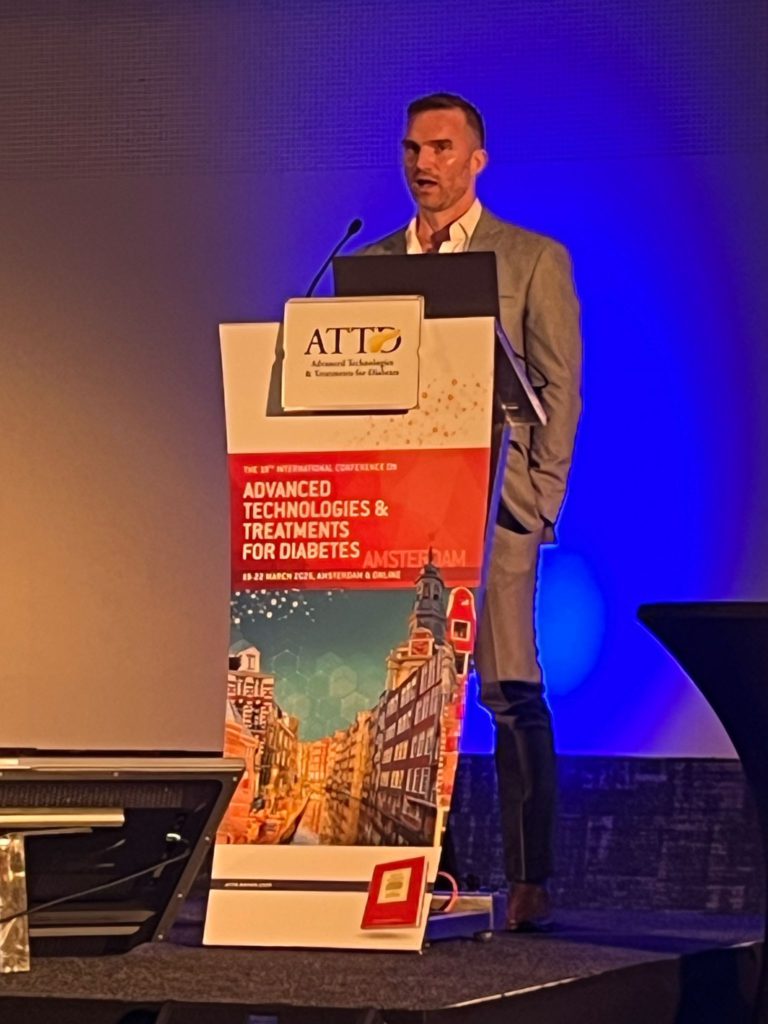
(11:37) Yes, really. John closed his conference talk with an AI-generated rap (with help from his daughter) about using movement to lower glucose levels. It brought the house down, and you will hear the full track around the 12-minute mark.
For a fun summary: 99 Problems But Highs Aint One (click if you want to download it, use it, share it).
Here is the presentation from ATTD 2025 in PowerPoint and PDF, use as you wish.
AID and high-fat meals, what the algorithms miss
(13:38) Dr Carmel Smart highlighted that even the best AID systems struggle with high-fat meals like pizza, due to delayed insulin resistance. Strategies such as split boluses and overestimating carbs are still necessary in some cases, reinforcing the idea that technology plus tactics is what works.
For how to do this: Episode 6: Ten Tips to Optimise Time in Range with AID.
Also, a proposed shift from “time in tight range” to “time in normal glycaemia” (TING) was discussed. Current AID systems only get about 50 to 60% of people to more than 50% time in TING, suggesting adjuncts like activity and GLP-1s are essential.
Quality of life gains from AID
(15:59) The Tandem Control-IQ2 trial showed not just improved glucose control but also better sleep and reduced hypo fear. However, John flags an important issue: there is unequal access to these technologies. In his own service, they discovered a 90% white ethnic background among AID users, despite a much more diverse patient base. By 2024, they had reversed this, showing that intentional service redesign can improve equity.
What is needed to reach 70 to 80% TIR?
(17:55) AID alone might not be enough. John argues we need:
- Better algorithms (AI-driven)
- Adjunct therapies (GLP-1s, SGLT2 inhibitors)
- Lifestyle strategies (exercise, nutrition), all of which he covers in the Insulin Resistance Guide
CGMs, the good, the bad and the misleading
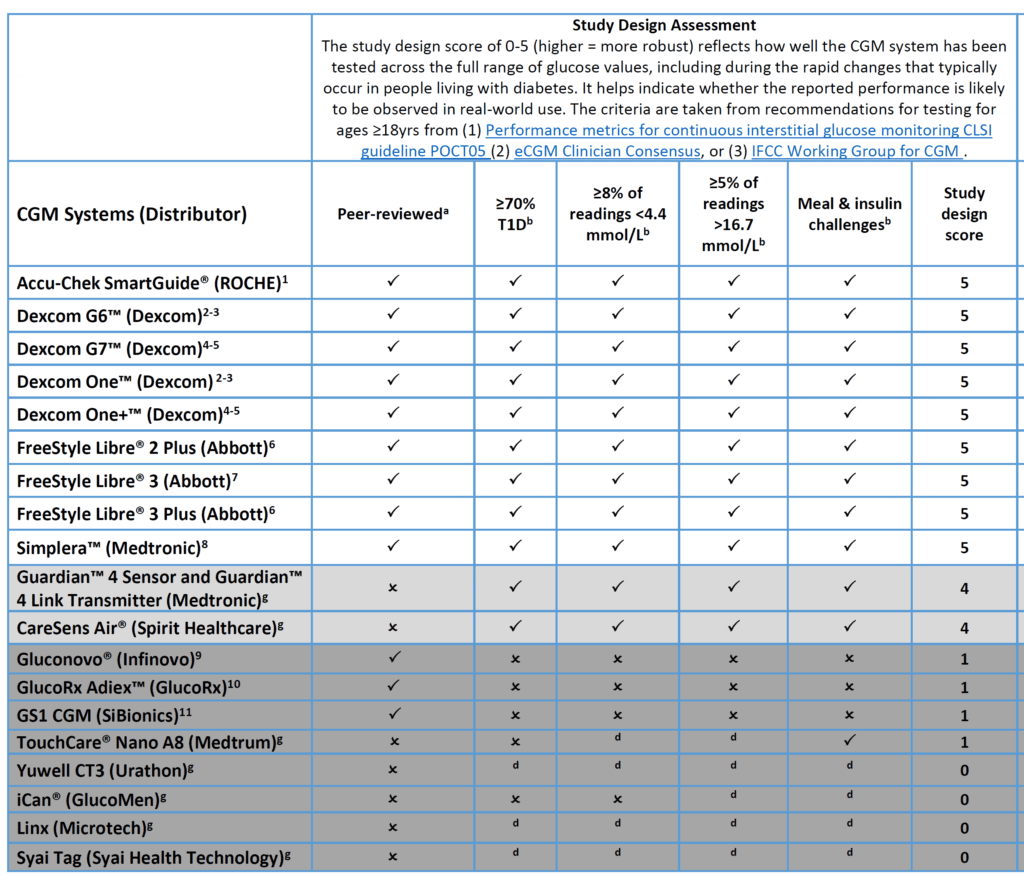
(19:35) John flags a major issue: not all CGM accuracy claims are created equal. All companies quote a MARD below 10%, but unless their study design includes real-world tests (meals, boluses, extreme highs and lows), that number is meaningless. He highlights Roche’s Smart Guide as one new entrant doing things properly, and the others that are not. Read the CGM Guide and the chart below as a primer.
Study design before performance (MARD). A headline accuracy figure only means something once you know the conditions it was measured under.
AI-driven CGM alerts are coming
(22:38) Roche also previewed new predictive alerts:
- Hypo risk in 30 minutes
- 2-hour glucose forecast
- 7-hour overnight traffic-light hypo risk
Early data from Europe looks promising. John also shares that Dexcom G7 will soon last 15 days, and Libre 2/3 Plus already meet the highest CGM accuracy criteria.
What is next, and final thoughts
(24:30) Data from the Radiant trial shows Libre 2 plus Omnipod 5 performs similarly to Dexcom plus Omnipod 5, but HbA1c data is still awaited. John ends by previewing upcoming episodes, especially a deep-dive CGM series with Louise, covering:
- How to evaluate CGM accuracy
- Alerts, alarms and AI
- Integration with AID systems
- Size, calibration and usability
If you found the episode helpful, please share it, leave a comment, and check the show notes for links to the rap, the insulin resistance guide, and the CGM comparison resources.
Show notes and resources
- The study details and links can be found in the ATTD 2025 Top 10 Hits
- Download the Glucose Rap
- Insulin Resistance Guide
- CGM Accuracy Series
- Episode 8: Activity for Post-Meal Glucose Control
- Episode 6: Ten Tips to Optimise Time in Range with AID
Thanks for listening. Catch you soon in the CGM Series.
John Pemberton, The Glucose Never Lies Podcast
Related reading on GNL
Episode 9 of the GNL Podcast
ATTD 2025 highlights and the new CGMs
This content is for educational exploration only. It describes average responses and general principles. It is not medical advice and cannot replace individual clinical guidance from your diabetes care team.