
Mealtime Insulin Guide
Mealtime Insulin: Predictability, not Perfection
The lasagne is on the plate, the kids are at the table, and the bolus question lands the same way it has landed for years. How much, how soon, and what is the meal going to do for the next four hours that the dose has to keep up with. This guide gets you comfortable managing the three meal patterns everyone meets, the everyday plate, the carb-only snack, and the fat-and-protein meal that runs long, so mealtime becomes predictable rather than a guessing game.
Ask Grace
Want to ask which pre-bolus window fits your insulin, or how to size a split bolus for a fat-and-protein meal? Ask Grace.
What the Mealtime Insulin Guide covers
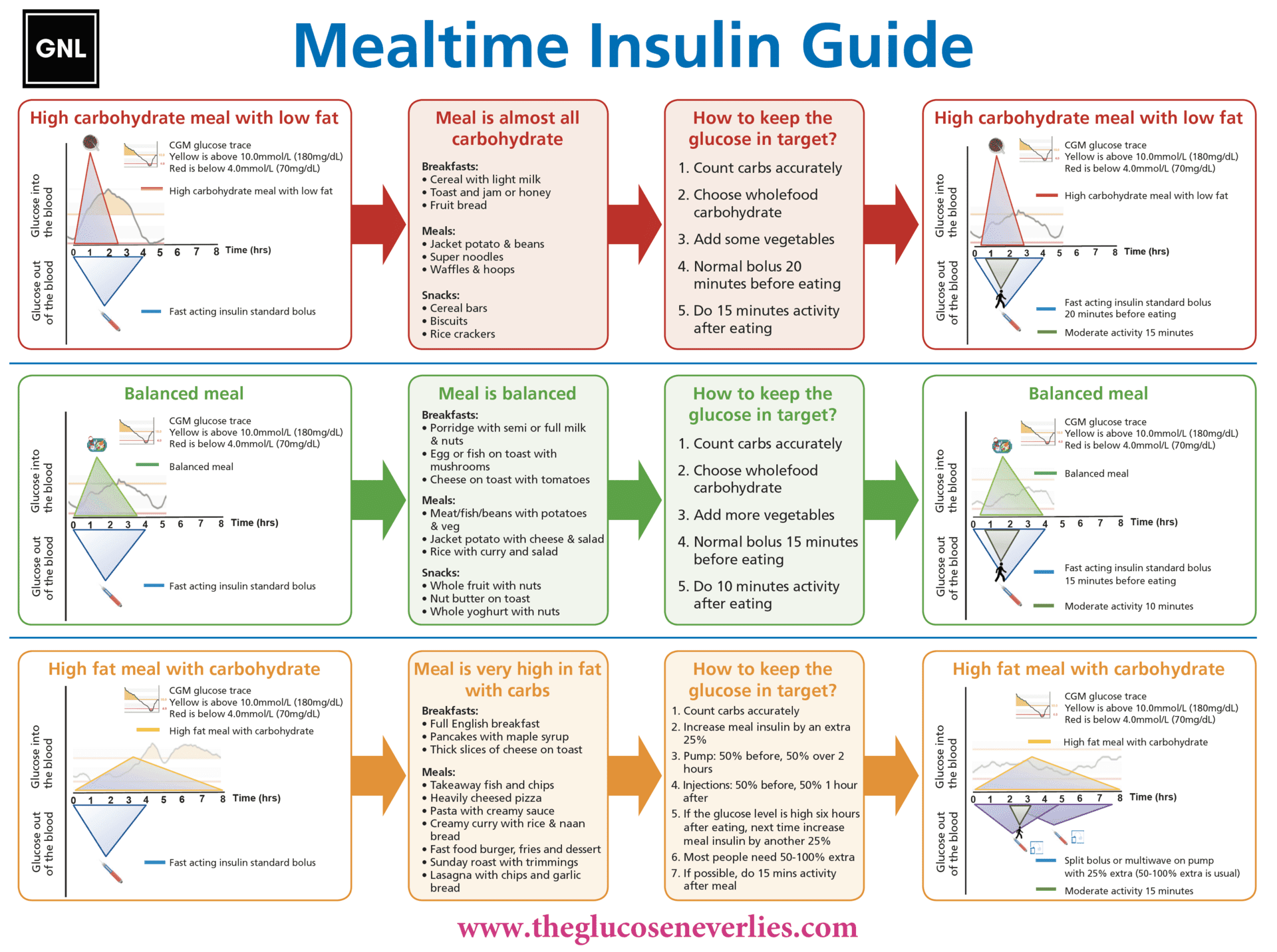
Every meal falls into one of three broad patterns, and each one asks something slightly different of the same insulin dose. This guide, in three parts, gets you comfortable managing all three: the everyday balanced plate your usual ratio already handles well, the carb-only snack that needs a touch less insulin than expected, and the fat-and-protein-heavy meal, the pizza, the lasagne, the Sunday roast, that runs high for hours after a usual dose has finished working. Pick the part that matches tonight’s meal, or read all three in order to build the whole picture.
Mealtime Insulin Knowledge Check
Try the assessment on this page any time, before you read the three parts below or once you have been through them. It is a quick way to see where mealtime insulin still feels shaky, and 9 out of 10 earns your certificate.
The three parts of this guide
Each part below takes one meal pattern in turn, with the mechanism, the numbers, and the keystone diagrams that have been in use across the GNL community for years. Read in sequence if it is the first time through; otherwise, jump to the part that matches the meal in front of you tonight.
Part 1: High-Carb Meals, Smashing the Spike
Cereal, jacket potato with beans, toast and jam. Carbohydrate enters the bloodstream faster than injected insulin can act, so the spike is the predictable result. The page walks the mechanism (portal-vein bypass, slow subcutaneous absorption) and the moves that close the timing gap most reliably (pre-bolus, post-meal walking, food-sequencing).
Part 2: Balanced Meals, Stay in Range
Half a plate of vegetables, a palm of protein, a fist of carbohydrate. Balanced meals produce a smaller, slower glucose rise and make insulin timing predictable enough to learn from. The page walks the plate model and the two SET-framework tactics that flatten the post-meal curve when the structural pattern is in place.
Part 3: High-Fat Meals, How to Conquer Pizza with T1D
Pizza Friday, the cheese-laden lasagne, the takeaway curry. The first hour looks fine, then glucose climbs at hour three and does not come back for hours. The page walks the DAG mechanism (Shulman’s intracellular fat intermediates) and the three response options: split-and-extend the insulin, use activity as an insulin sensitiser, or accept the rise and use GAME.
Mealtime Insulin Guide
Mealtime Insulin: Predictability, not Perfection